


Provide chain administration in 2020 was severely challenged by the COVID-19 outbreak. Though choose segments of some manufacturing flows noticed enchancment in 2021, the whole course of nonetheless faces seemingly unattainable challenges in 2022. We’ll have a look at a couple of of these challenges to provide chain administration all companies will wrestle with throughout 2022, from the acquisition of fundamental supplies, the transformation into items and providers, and the supply to finish customers.
1. Demand Uncertainty
As companies proceed to adapt to the post-COVID-19 breakout period by including provide chain redundancy (discovering a number of suppliers of the identical merchandise to function backups in case the first provider is in some way compromised), additional embracing digital transformation, and holding larger stock, they’ll meet doubtlessly drastic adjustments in each upstream and downstream provide chains.

2. Inflation
One of many challenges in provide chain administration to beat is inflation. Inflation each causes and is brought on by slow-downs within the provide chain. Although the Federal Reserve has set a goal of two % for inflation, charges for the previous 12 months had been seven % in February 2021 and seven.9 % in February 2022. Demand was up in 2021, contributing to port congestion and supply slow-downs, which led to a rise in costs. Provide was down in 2021 as a result of ongoing challenges in international provide chain administration, together with labor shortages and elevated costs.
3. Elevated Client Demand
Having folks clamoring for extra of your services would usually be seen as an excellent factor. However this improve in demand changed into an excessive amount of of an excellent factor in 2021 when demand for a lot of items and providers, notably sturdy items, elevated. Elevated demand for services means a rise in competitors for uncooked supplies, inflicting potential disruptions in provide chains.
4. Uncooked Supplies
Whether or not the uncooked supplies of your far-upstream provide chain are comparatively uncommon (lithium, palladium, gold, and many others.) or are comparatively widespread (quartzite, copper, metal, and many others.), uncooked materials suppliers have solely lately returned to pre-pandemic ranges of output and are struggling to fulfill the elevated calls for of 2022. Whereas some uncooked supplies are beginning to return to pre-pandemic manufacturing ranges, others should not.
About half of the world’s semiconductor-grade neon is produced by two companies in Ukraine. Confronted with rising civilian deaths and infrastructure injury brought on by Russian shelling of Ukrainian cities, each Ukrainian companies have ceased operations. Had been the Russian violence to finish quickly, it’s uncertain manufacturing would return to pre-invasion ranges any time quickly. Confronted with unsure laptop {hardware} provides in 2022, many small- and medium-sized companies are bypassing some challenges in provide chain administration with regard to their hosting by turning from a CapEx-funded on-premises infrastructure to hosted infrastructure.
5. Chip Scarcity
Associated to (and stemming from) the problems with uncooked supplies, we face a world chip scarcity. From automotive to MedTech, each sector is feeling the pains of the present silicon chip scarcity. With demand for chips anticipated to double throughout the subsequent 5 years, the scarcity is anticipated to persist by means of 2022 and can have an effect on PC and server infrastructure for a while to return. For eCommerce, turning to cloud computing may be an effective way to scale back prices by solely paying for server sources as they’re used.
6. Port Congestion
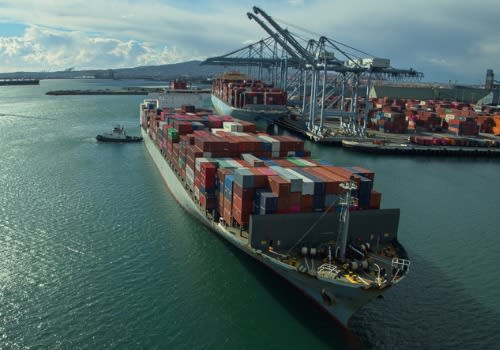
Already beleaguered by pandemic-driven power congestion, U.S. ports on the west coast are anticipated to see union-led work slowdowns as they close to their contract renegotiations in July of 2022. Along with labor points, some ports, most notably the port of Los Angeles, proceed to lag behind in much-needed digitization efforts, resulting in extra challenges in provide chain administration.
7. Labor
Each sector of the economic system has been hit with pandemic-related labor shortages. In developed markets, many older, upper-income staff voluntarily selected early retirement. In rising markets, most notably China and India, lockdown restrictions led to job elimination and wage discount, inflicting expert migrant staff to transfer again to their respective provinces and states. As future uncertainty fades, these tendencies are anticipated to reverse considerably.
8. Simply-In-Time Stock Administration
JIT (just-in-time) stock administration is a technique of managing your stock in such a manner that what you want, from uncooked supplies to completed merchandise, is accessible to you simply earlier than you want it. Even in the event you aren’t utilizing JIT now, not less than a few of your upstream suppliers and suppliers undoubtedly are.
Pre-COVID-19 breakout, many provide chain managers swore by just-in-time stock administration as a method to each cut back prices and improve effectivity. Submit-Covid-19 breakout, it’s now clear to all that this method is extraordinarily susceptible to systemic shock. Suppliers can’t forecast lead occasions, producers can’t forecast market demand, and transporters can’t forecast supply dates. Provide chain managers now wrestle to refactor their methods, designs, and dependencies, all with a watch on enhancing provide chain resilience. This takes time to determine, and till the mud settles, just-in-time stock administration is all too typically too-darned-late.
9. Storage Capability Constraints
One of many largest challenges in provide chain administration is storage capability constraints. Although provide chain managers want to improve held stock of supplies and product provide, out there warehouse house is restricted, and acquisition of latest house may be each well timed and costly. For eCommerce companies, dropshipping or third-party logistics (3PL) can assist with onsite storage capability constraints. Internet hosting in a cloud computing atmosphere permits eCommerce websites to skip the step of shopping for and organising all of the {hardware} and software program required to self-host, a step made way more tough and time-consuming by materials shortages.
10. Final-Mile Supply
Although clients are returning to in-store and on-site purchases, buyer demand for staple gadgets has shifted considerably to last-mile supply fairly than in-store pickup. Initially, clients within the early days of the pandemic desired supply for causes of security; now, clients requesting supply are more and more citing comfort as their main motivation. Although the gig economic system–counting on freelance staff underneath short-term contracts–helped with the demand for supply in the course of the preliminary pandemic response, companies are actually in search of extra worthwhile, longer-term options.
Consolidate IT Infrastructure with a Managed Host
The challenges in provide chain administration brought on by this ongoing Nice Provide Chain Disruption are anticipated to final for the foreseeable future. Companies that consolidate their internet hosting infrastructure can be higher capable of make good use of the alternatives these challenges will uncover.