

In computing, a single, bodily server might be segmented into a number of remoted and particular person digital servers via some type of software program. Every of those digital servers is totally able to independently working its personal working system (OS).
Amongst different causes, that is performed primarily for tighter controls over all server customers. Server virtualization implies that customers can solely entry assets assigned to their distinctive occasion.
For instance, customers on a virtualized server can’t determine the overall variety of working techniques, processors, or different virtualized servers on the bodily server.
Moreover, they will solely use the utmost reminiscence or CPU cycles related to their occasion, stopping them from affecting different customers on the server.
How Server Virtualization Works
Servers are computer systems that course of requests from different computer systems inside a community. Classically, one server is devoted to 1 activity or utility. Contemplating simply what number of duties and purposes there are, this could add as much as an unmanageable variety of servers inside one community.
Servers take up house and energy to run. What’s extra, some trendy servers have extra assets (reminiscence and storage) than they should deal with the devoted duties or purposes required. This underutilization of computing energy throughout many servers can find yourself utilizing much more power than is important. Primarily, servers should be managed in a method that enables for environment friendly power consumption with out sacrificing computing capabilities.
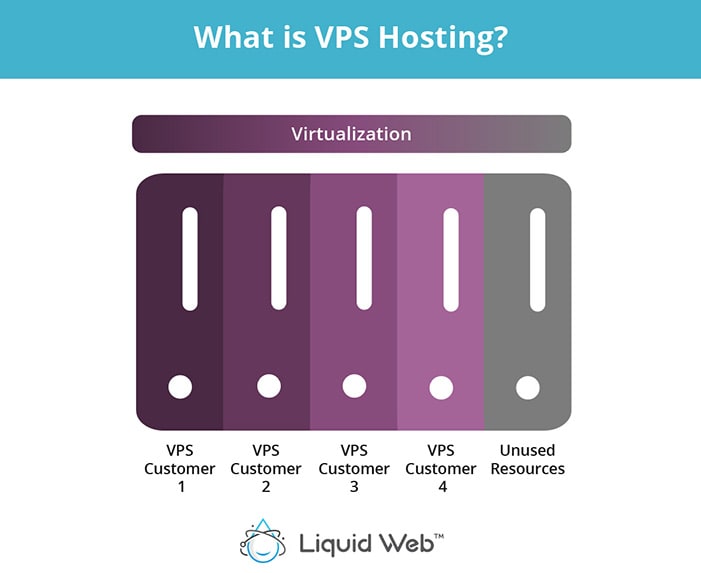
Server virtualization mitigates server inefficiencies by utilizing software program to divide a single bodily server into a number of totally remoted digital servers. Every of these digital servers is able to working impartial working techniques and finishing duties by dividing up the assets throughout the mother or father server.
Advantages of Server Virtualization
Virtualization can enormously profit a company. Along with streamlining community wants, server virtualization advantages embody:
- Saving House: Should you’re working one activity or utility per server, they are going to quickly take over your knowledge heart. By internet hosting a number of digital servers on fewer bodily servers, you’ll be able to probably save numerous bodily house.
- Reducing {Hardware} Prices: Constructing bodily servers might be pricey. Digital servers are a lot inexpensive to deploy.
- Bettering Useful resource Effectivity: Many servers are extra highly effective than wanted for the calls for they’re tasked with, that means organizations technically pay for unused assets. Virtualization helps be certain that all assets are being effectively used.
- Reducing Power Prices: Since virtualization permits you to effectively use server assets somewhat than construct pointless infrastructure, you’ve got fewer servers utilizing power.
- Reducing Demand on IT: Sustaining a big community of bodily servers might be taxing on a company’s IT division. Virtualization will help release IT employee assets to focus on different wants of the enterprise.
- Rushing Up Setup: Days or perhaps weeks can go by between buying {hardware} for bodily servers and implementation. Organising digital servers can take minutes.
- Simplifying Restoration: Backup techniques on digital machines (VMs) are fast and environment friendly. This implies you’ll be able to rise up and working after a system failure quick with little to no knowledge loss.
Drawbacks of Server Virtualization
Not every part is ideal with server virtualization. Some drawbacks to virtualization embody:
- Growing Upfront Prices: Any new {hardware} and licensing charges can add as much as greater upfront prices.
- Barely Decreased Efficiency: With assets shared, particularly with hypervisor-based virtualization, customers would possibly see a barely poorer efficiency. Duties might take a little bit longer to run. Nonetheless, with advances in server virtualization applied sciences, that is turning into much less of a problem.
- Server Sprawl: As a result of VMs are comparatively straightforward to construct, admins can unintentionally overbuild the community, which is called VM sprawl. When solely 10 servers might suffice, 20 VMs might be constructed.

5 Kinds of Server Virtualization
Server virtualization is widespread as an answer throughout organizations and industries. It’s because it solves some large issues like managing server assets, saving on infrastructure prices, and assuaging demand on IT. There are a number of forms of server virtualization that community directors depend on. Kinds of server virtualization examples embody:
- Full virtualization.
- Para-virtualization.
- {Hardware}-assisted virtualization.
- OS-level virtualization.
- Hypervisor virtualization.
1. Full Virtualization
With full virtualization, a kind of software program referred to as a hypervisor splits up the server’s assets between fully impartial digital servers which are remoted from one another. The hypervisor handles how assets are allotted between every digital server. Because the digital machines are separate, all of them run on their very own working techniques and might be configured as wanted.
2. Para-Virtualization
Para-virtualization is considerably associated to full virtualization in {that a} hypervisor can entry digital machines via interfaces which are extremely much like the underlying {hardware}. Previous to set up inside a digital machine, para-virtualization includes modifying a visitor working system to permit all different visitor OS on the server to share assets and talk with each other. As a result of all of the VMs are working collectively, there are fewer calls for on the hypervisor, that means extra of the virtualization server’s assets are devoted to the digital servers.
3. {Hardware}-Assisted Virtualization
With hardware-assisted virtualization, the division of assets wanted to help a number of VMs is already constructed into the CPU of the host server. This enables digital machines to speak on to the principle server somewhat than totally via the hypervisor. It’s a approach to partially lower out the intermediary, although a hypervisor remains to be wanted. Because the path between the digital machines and the bodily server is extra direct, the hypervisor makes use of a really vital quantity of the server’s assets. This makes it seem to be the digital machines are working instantly on the server.
4. OS-Degree Virtualization
With full virtualization, para-virtualization, and hardware-assisted virtualization, a hypervisor is required to supply a platform on which digital servers’ working techniques can run. With OS-level virtualization, nonetheless, the host server’s working system is ready as much as enable for a number of situations of digital machines referred to as containers. The VMs function in a lot the identical method in OS-level virtualization as in hypervisor virtualization, however the computing overhead of the host working system is a a lot greater proportion of the bodily server’s assets than in a hypervisor-based system. Nonetheless, OS-level virtualization might be less complicated and more cost effective for a brand new person to implement.
5. Hypervisor-Based mostly Virtualization
With hypervisor-based virtualization, software program (the hypervisor) just about emulates the {hardware} of the principle server, mainly appearing just like the bodily machine on which working techniques can run. The hypervisor allocates assets of the bodily server throughout the assorted visitor digital machines.
Full virtualization and para-virtualization are forms of hypervisor-based virtualization. {Hardware}-assisted virtualization is a kind of hybrid virtualization that’s hypervisor-based in addition to hardware-based.
Server Virtualization: What to Think about
Virtualized servers will help enhance a company’s computing techniques in a number of methods. They permit IT to pay attention much less time on the interior community, save house within the knowledge heart, maximize server assets, and lower prices related to {hardware} and power. On prime of all that, organising a digital machine is way less complicated than organising a brand new bodily server.
Nonetheless, server virtualization is usually related to shared server assets or multi-tenant options. Whereas multi-tenant servers are more economical and might be very highly effective, they’re typically related to potential challenges like noisy neighbors and extra safety or stability points.
One approach to mitigate these dangers is to decide on a bare-metal virtualization method. With naked steel virtualization, you’re the single tenant utilizing the server’s assets, despite the fact that there’s nonetheless a hypervisor managing the digital servers. Naked steel virtualization can provide you all the advantages of cloud computing whereas minimizing the dangers related to shared server configurations.
Liquid Net Is aware of Virtualization
Whereas it’s potential to arrange your individual hypervisor or OS-level virtualization in your native server room, you don’t should run your digital machines by yourself personal on-premises bodily servers. Liquid Net gives a wide range of internet hosting choices to suit your wants.
On the entry degree, you could possibly choose a conventional naked steel server and set up your individual virtualization software program. Should you want a easy path to profiting from naked steel virtualization, our naked steel cloud servers provide single-tenant virtualized servers, supplying you with the facility and efficiency you want in a single package deal.
Should you want the final word answer for efficiency and suppleness, Liquid Net’s VMware Personal Cloud will give you every part you want. From load balancing to DDOS safety and Excessive Availability Databases, you’ll have an industry-leading, enterprise answer at your fingertips.
Attain out to one in all our Options Specialists in the present day to begin profiting from the facility of virtualization for all of your server internet hosting wants.