


WordPress customized fields are nice for including further content material to your posts and pages. Enabling them will make it simpler so as to add customized content material to your website and enhance consumer expertise.
And on this tutorial, we’ll present you the finest methods so as to add customized fields in WordPress.
This information will cowl:
- Manually including customized fields in WordPress
- Including customized fields with plugins
- And rather more.
Let’s get began:
How you can Add WordPress Customized Fields Manually
There are a few methods you may add customized fields in WordPress, the handbook manner and utilizing plugins.
Here is the best way to add fundamental customized fields to posts and pages manually.
Step 1.1 Enabling Customized Fields in Gutenberg
Step one is to modify on the customized fields choice within the WordPress editor. This may be finished from posts or pages.
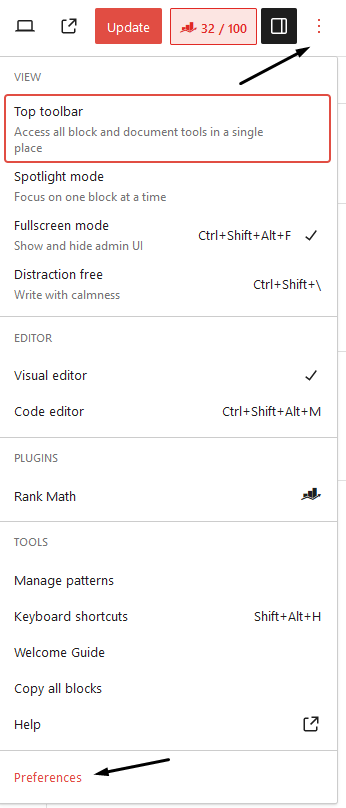
Click on on the three dots within the high proper nook, then Preferences:
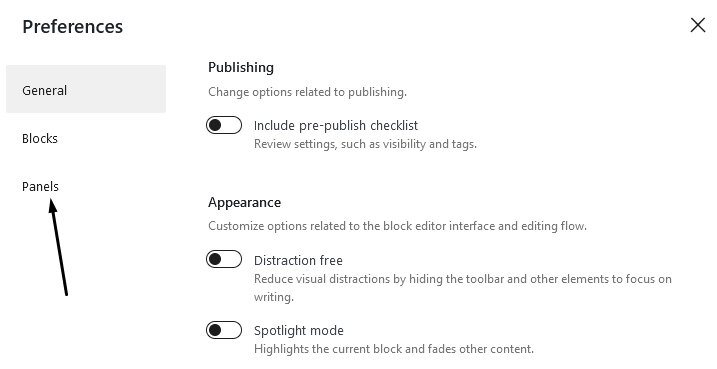
Then click on on the Panels choice:
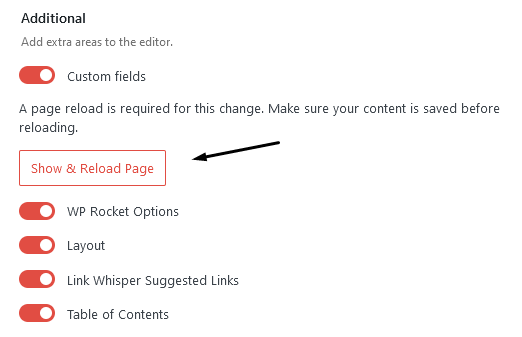
Below the extra settings, you will see the choice for customized fields. Toggle this on after which click on on the Present & Reload Web page button:
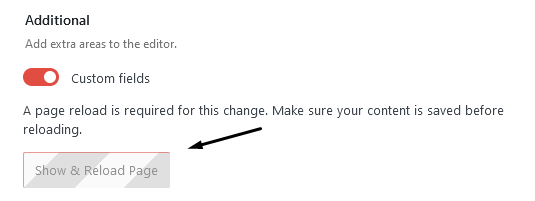
The web page will routinely refresh to activate the customized fields:
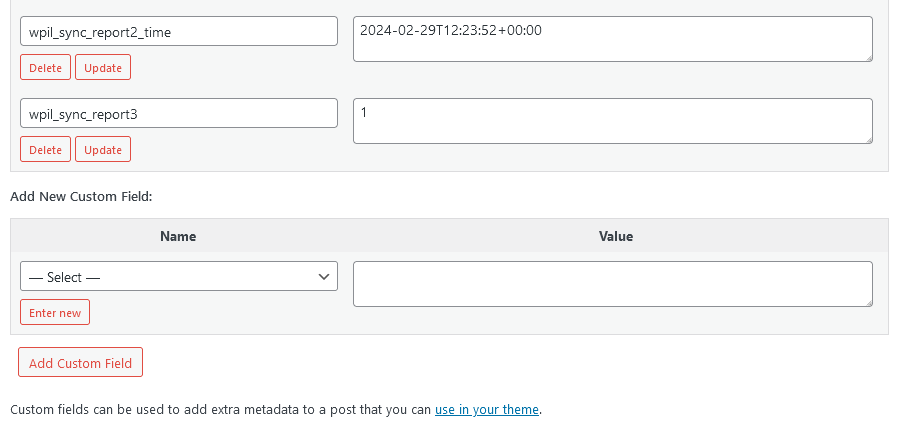
Scroll down in Gutenberg, and you may see the customized fields part:
Step 1.2 Enabling Customized Fields within the Traditional Editor
Should you’re utilizing the basic editor plugin, right here is the best way to allow customized fields.
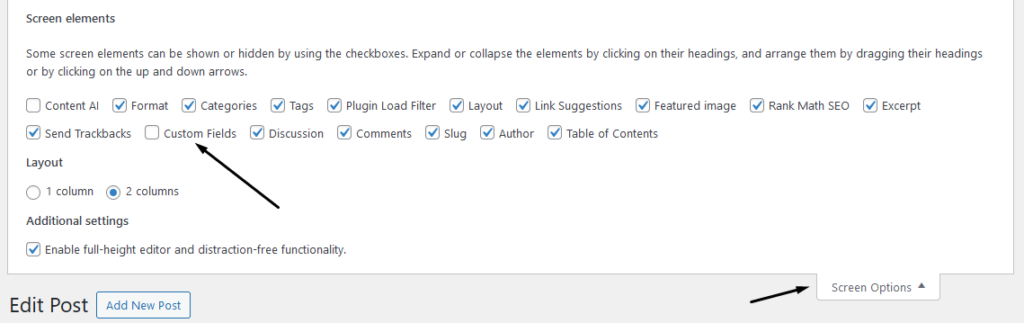
Open up a brand new WordPress submit or web page or edit an previous one. On the high of the display, you will see the Display Choices tab, click on on it after which choose Customized fields from the choices:
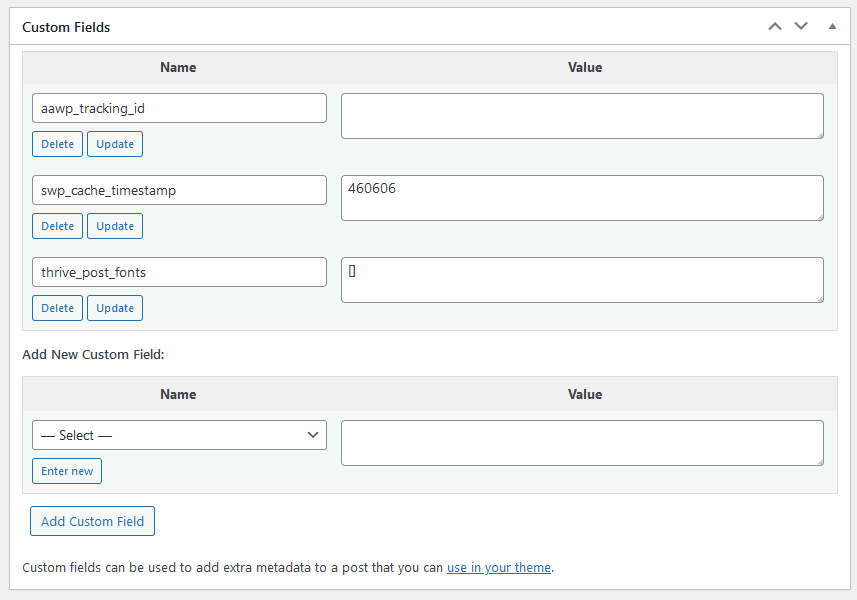
Scroll down within the basic editor to seek out the Customized Fields part:
Step 2. Making a WordPress Customized Subject manually
Now it is time to create a customized discipline. On this instance, I will add a secondary title.
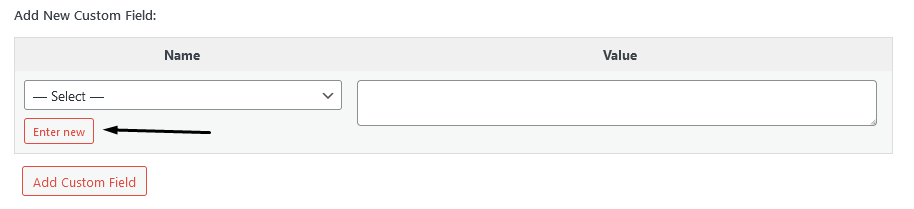
Below Add New Customized Subject, click on the Enter New button:
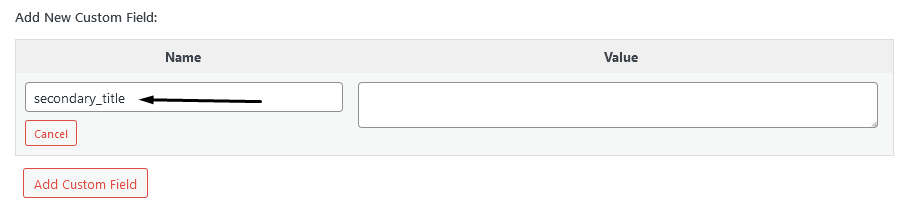
Then give your customized discipline a reputation, including an underscore between phrases:
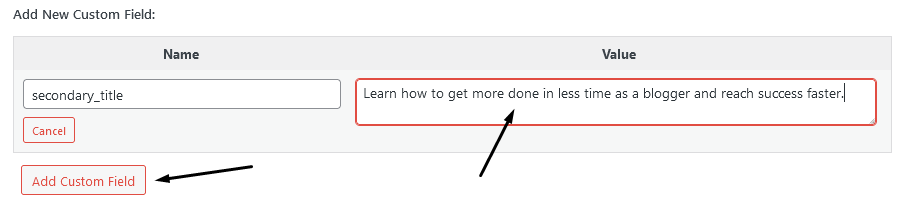
Enter the customized discipline worth and click on on the Add Customized Subject button:
Step 3.1 Displaying a Customized Subject in Your Theme
To show your customized fields within the entrance finish, you’ve got just a few choices. The primary technique is so as to add code to your theme.
This technique ought to solely be used if what you are doing, or on the very least, save a backup of your WordPress web site earlier than persevering with.
So as to add the code to your WordPress theme, first, be sure you’re modifying a baby theme and never the primary theme.
Navigate to your recordsdata within the theme editor, discover the only.php, and add this code:
<?php echo get_post_meta($post->ID, 'secondary_title', true); ?> Simply change the ‘secondary_title‘ textual content together with your customized discipline identify.
The construction of your theme and the customized discipline you created will rely upon the place it’s essential add the code.
Step 3.2 Displaying Customized Fields Utilizing Hooks and Code Snippets
One other manner so as to add your customized fields to your theme is by including code snippets to your theme’s operate.php file or utilizing a Snippets plugin.
Hooks help you add code in particular areas of your theme’s pages or posts. Filters assist goal particular areas on the web page, for instance, instantly after the primary title.
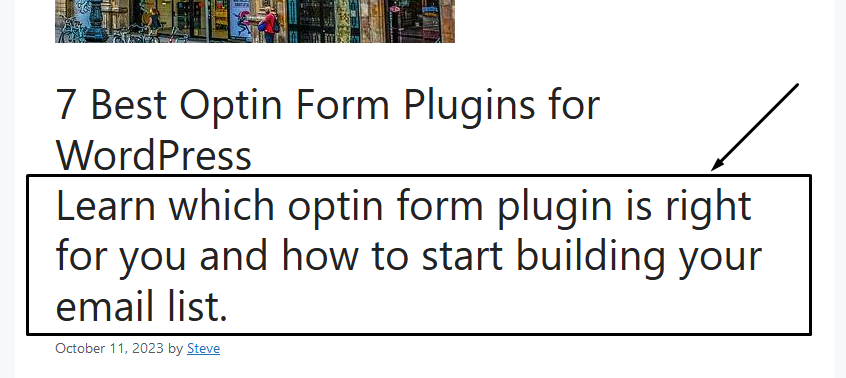
Here is the code snippet I might use so as to add my secondary title customized discipline after the title:
operate add_secondary_title_after_default_title($title, $id = null) {
   if (is_single() && in_the_loop()) {
       $post_id = $id ?? get_the_ID();

       if ('submit' !== get_post_type($post_id)) {
           return $title;
       }

       $secondary_title = get_post_meta($post_id, 'secondary_title', true);

       if (!empty($secondary_title)) {
           $title .= '<br><div class="secondary-title">' . esc_html($secondary_title) . '</div>';
       }
   }
   return $title;
}
add_filter('the_title', 'add_secondary_title_after_default_title', 10, 2);
This code is saying IF the web page you are on is a single submit and it is contained in the loop, test if the secondary_title customized discipline exists.
Then if it does, add the customized discipline after the title inside a <div> tag.
Here is what it appears to be like like:
We are able to additionally goal the div class with some CSS to customise the fashion of the textual content. Here is some CSS I added to the extra CSS within the customizer:
.secondary-title {
  font-size: 28px;
  font-style: italic;
  line-height: 1.4em;
}
Here is the consequence:

That is it. You’ll be able to alter your styling to nonetheless you need your customized fields to look.
Step 3.3 Displaying Customized Fields with Block and Web page Builders
This subsequent technique for including customized fields in WordPress is to make use of a particular characteristic in some premium themes.
It is just like including customized code within the earlier technique, however it’s constructed into the theme and is much less technical. Plus it offers you far more management and is extra user-friendly.
In my instance, I am utilizing GeneratePress Professional and the Components add-on. Components in GeneratePress Professional helps you to create template layouts, hero headers, template blocks, and hooks.
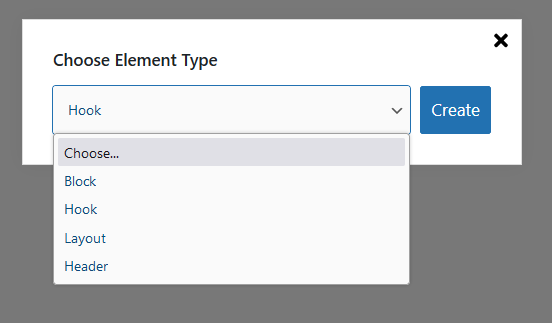
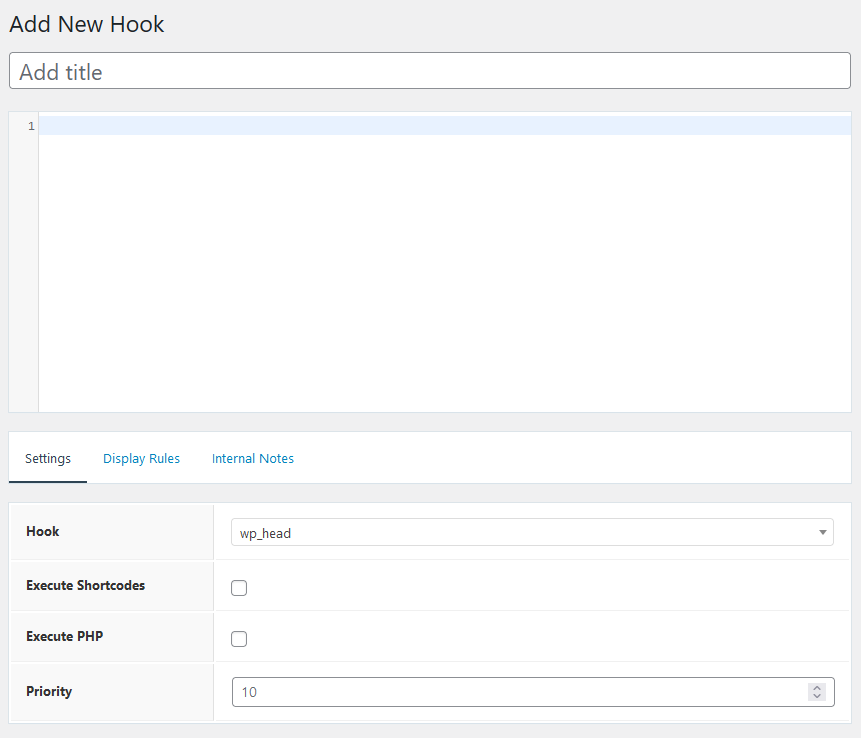
So as to add your customized discipline utilizing this characteristic, choose the Hook choice. You may see a discipline you may add the code to, hook settings, and show guidelines:
Fill out the packing containers that relate to your customized discipline:
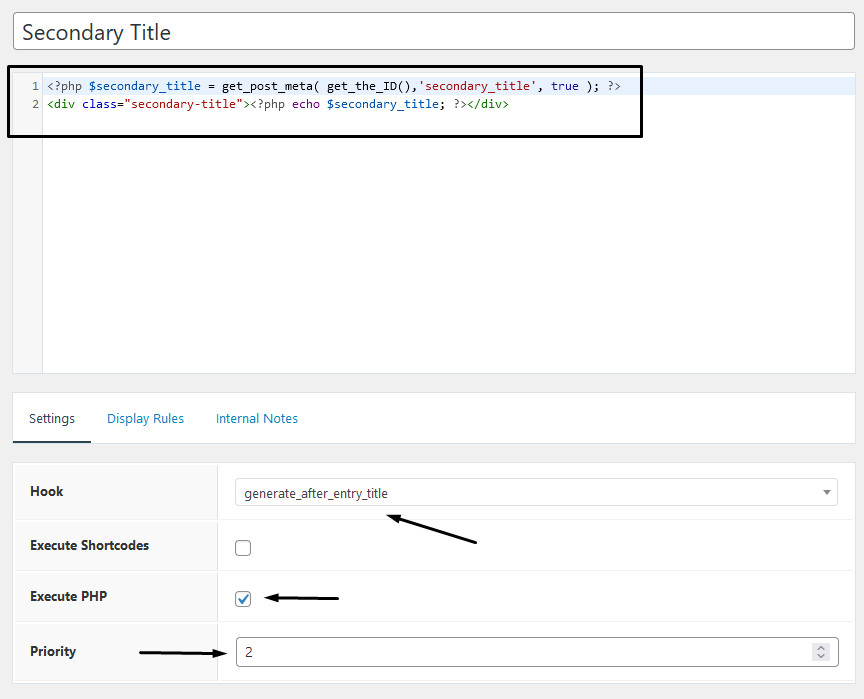
This consists of:
- A title to explain your hook
- The code for the customized discipline
- The hook to outline the situation it can present in your theme
- Verify Exucute PHP
- And setting the precedence.
In my instance, the code creates a variable known as ‘secondary_title‘ which calls within the customized discipline. I then show the customized discipline by calling the variable with echo and inserting it contained in the div class.
The GeneratePress discussion board may be extraordinarily useful in these conditions.
The consequence is similar because the earlier technique, solely much less code was wanted:

Now that you’ve got discovered the best way to add customized fields in WordPress manually let us take a look at a extra superior manner of making customized fields.
How you can Add WordPress Customized Fields with a Plugin
Within the earlier part, we added customized fields utilizing the built-in customized fields characteristic on the editor, however there’s one other manner.
Utilizing a WordPress plugin known as Superior Customized Fields, we are able to add fields to any submit sort with out the necessity to declare its identify each time.
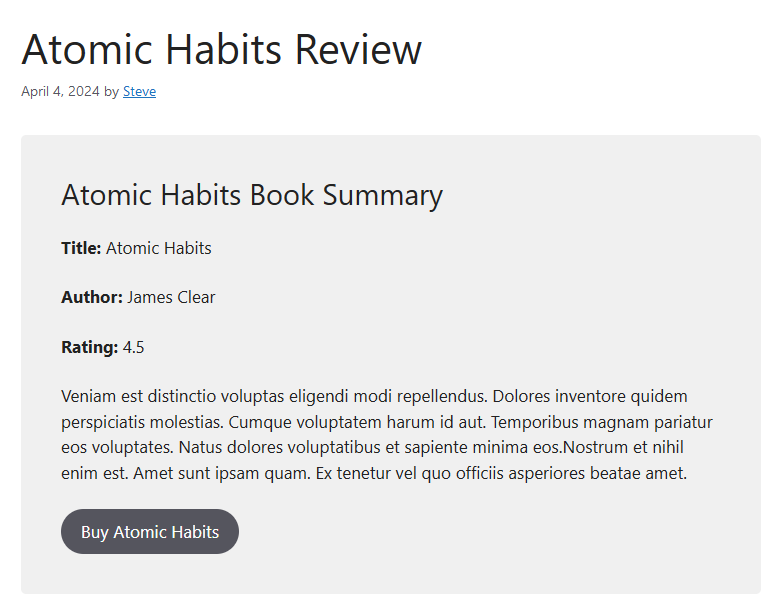
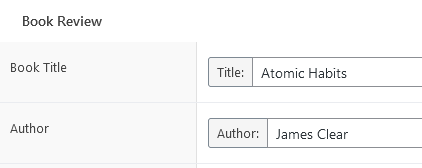
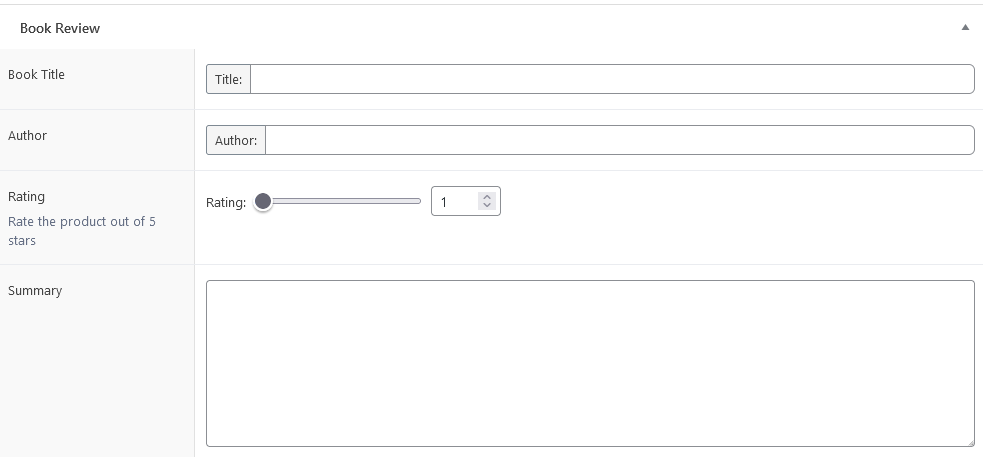
Here is an instance of some e book overview fields I created:
Here is how I did it.
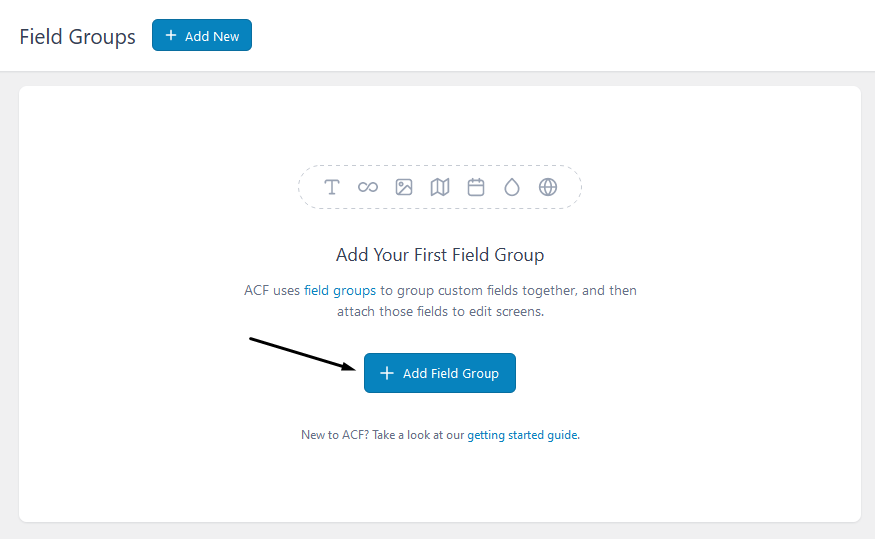
First, obtain and set up the Superior Customized Fields plugin and create a brand new discipline group:
Give your customized fields group a reputation and begin including the fields you want.
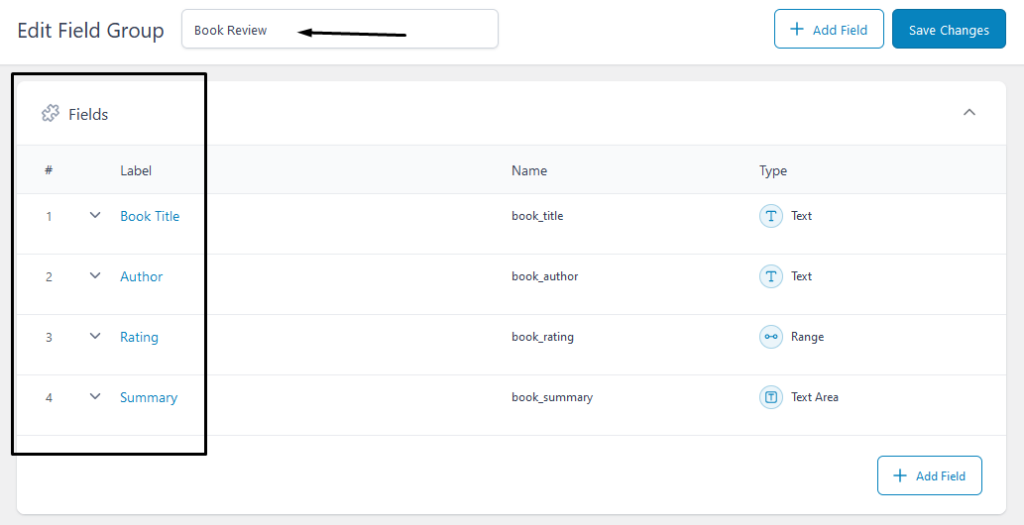
In mine, I’ve added:
- E-book title
- Creator
- Score
- Abstract.
Every discipline has completely different choices, resembling discipline sort, label, and discipline identify:
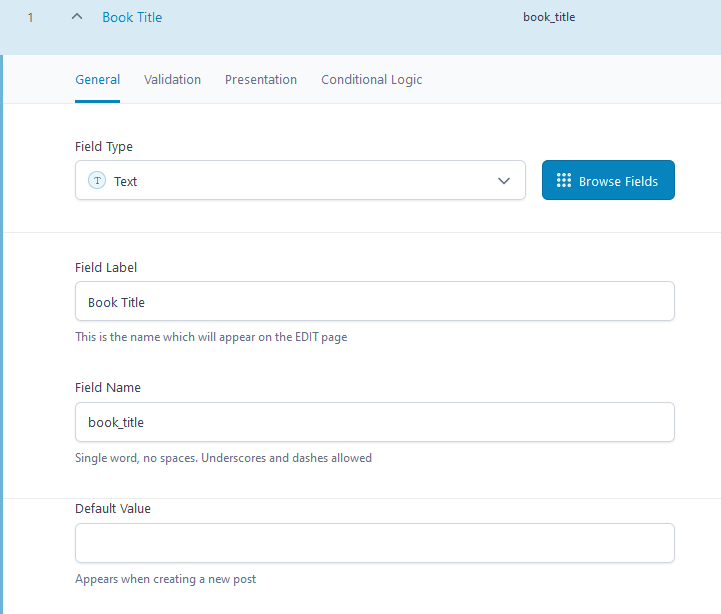
For instance, the e book title and writer are textual content fields and the e book abstract is a textual content space. This determines how a lot house or content material may be added contained in the editor:
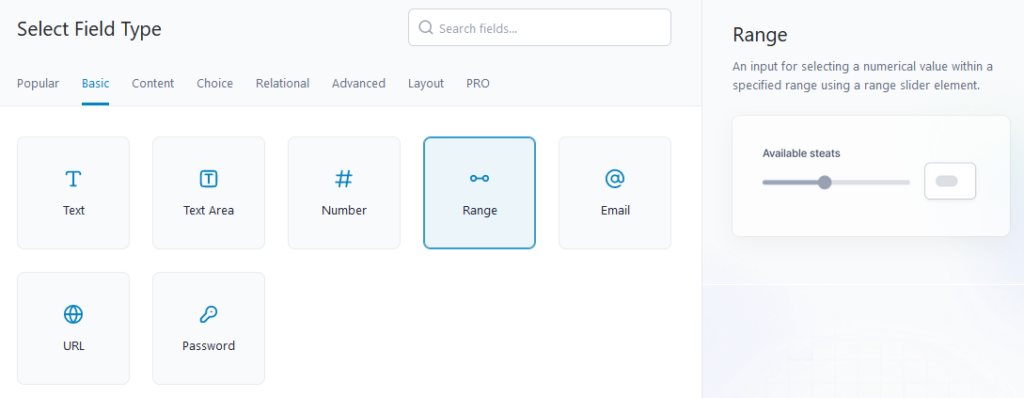
For the score, I used the vary discipline sort. This creates a slider factor to decide on the worth because the score:
The settings on the backside allow you to outline the place this practice discipline group will present:
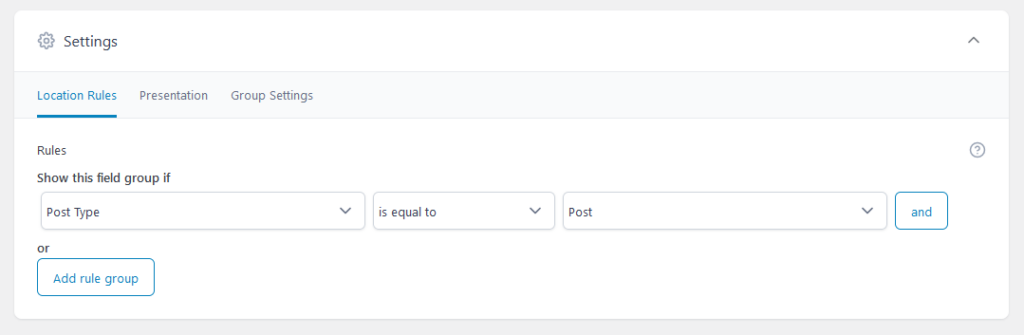
I am including mine to the default posts sort, however a e book critiques submit sort would work properly right here.
It can save you your customized discipline group and create a brand new submit. Scroll to the underside, and you may see your customized fields:
Now it’s essential determine how you will show them on the web page. The simplest strategy to show them is utilizing shortcodes like this:
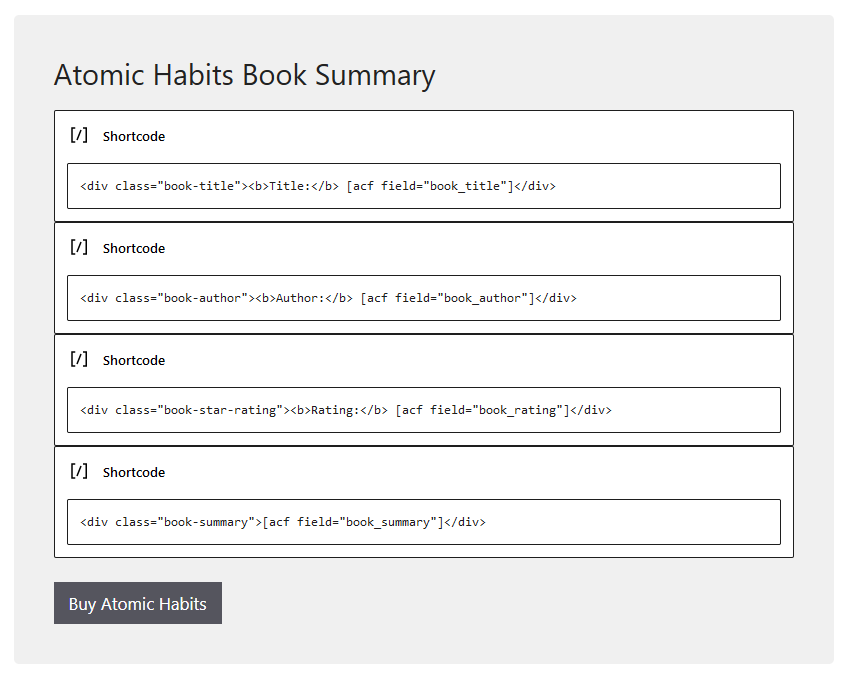
The shortcode for Superior Customized Fields appears to be like like this, you simply want so as to add your individual discipline identify:
[acf field="book_title"]I added some HTML and a label surrounding the shortcode in order that I might fashion the textual content and make issues clearer on the entrance finish.
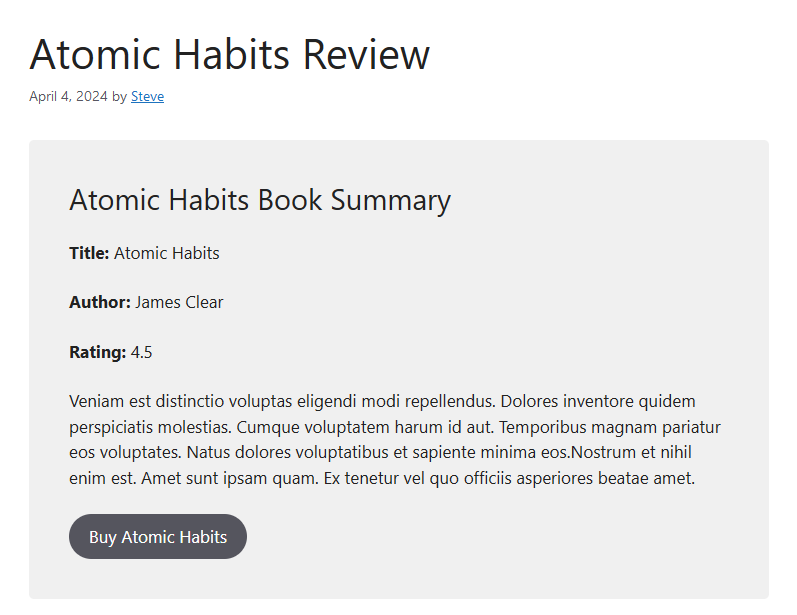
I additionally added a button with a hyperlink to the e book and grouped every little thing inside a grey group block to make it stand out.
Here is what it appears to be like like within the submit:
That is it! So as to add code on to your theme, you may consult with the handbook steps above or watch this implausible tutorial and playlist on YouTube:
3 WordPress Customized Fields Plugins
To date, I’ve proven you the best way to add customized fields utilizing code snippets or the free model of the Superior Customized Fields plugin.
However what are another choices that may additional help you in constructing customized fields in WordPress?
Listed here are just a few different instruments so that you can look into.
Superior Customized Fields Professional
Within the free model of ACF, I confirmed you a few of its fundamental options, which may be ok for some use instances.
Nonetheless, the professional model opens up a ton of potentialities for complicated web site builds.
- Additional fields. Get entry to far more fields resembling gallery, clone, versatile content material, and repeater discipline.
- ACF Blocks. Permits you to construct your individual Gutenberg blocks with built-in customized fields you create in ACF.
- Possibility pages. Construct customized choices pages within the admin that places customized fields with common settings in a single place.
- Import and export. Import or export customized discipline teams to save lots of time throughout a number of tasks.
- Extra customizations. Provides you extra management over customizations with PHP and JS actions and filters
ACF Professional has been a favourite customized discipline plugin within the WordPress group for a few years. You may get the premium model for as little as $49 per yr.
Meta Field
Meta Field is one other useful plugin for serving to you show your customized fields inside visually interesting meta packing containers.
This plugin is nice for builders preferring to maintain their website lean by including customized fields and submit sort code on to their features.php.
There are a ton of free and paid extensions for much more options.
Some embrace:
- Remark Meta: Add customized fields to WordPress feedback.
- Customized submit varieties and taxonomies: Allow you to add a customized submit sort and customized taxonomy.
- Relationships: Make connections between posts and pages and the customized fields you create.
- MetaBox Blocks: Create your individual Gutenberg blocks with PHP.
- Meta Field Builder: Use a drag-and-drop builder to create customized meta packing containers and customized fields in WordPress.
- Conditional logic: Create visually dependent meta packing containers and customized fields for a greater consumer expertise.
The free model of Meta Field and its free extensions supply loads of options, however you may get a premium license with much more options beginning at $49 per yr.
Customized Publish Sort UI
Customized Publish Sort UI is a plugin that permits you to create and handle customized submit varieties within the WordPress admin.
As an alternative of coding them your self, it makes use of a user-friendly interface that anybody can use so as to add customized submit varieties.
Want a portfolio to your work? How a couple of product overview submit sort? No downside.
This plugin additionally goes hand-in-hand with ACF and Meta Field, as you may add customized fields and meta packing containers to the submit varieties you create.
Customized Publish Sort UI affords most of its options without cost, with its extension that can assist you show your information simply.
Customized Fields in WordPress in Conclusion
WordPress customized fields are a good way of including further content material to your website extra effectively. It might additionally enhance consumer expertise and improve consumer engagement.
Following this entire information makes including customized fields in WordPress a breeze. It’s also possible to use a number of the plugins talked about to streamline your course of.
For extra, learn our WordPress ideas submit to take advantage of out of your WordPress website.