

The world has skilled a continuing development of on-line exercise because the know-how wanted to allow this turned extra accessible. Nevertheless, this development price accelerated in 2020 as a result of pandemic forcing folks on-line to keep up private and enterprise actions within the face of bodily lockdowns. An unlucky aspect impact of this elevated on-line exercise was a corresponding improve in cyber assaults focused on the new wave of digital dependents with little to no concept the best way to mitigate the safety dangers and threats they now face.
Reviews point out a spike in frequent safety threats like malicious emails, ransomware assaults, and vulnerability exploits on essential IT infrastructure. Coupling these statistics with survey outcomes that present how unprepared most organizations are to reply to a cyber assault already paints a grim image of the longer term, however there’s extra. Newer applied sciences like cryptocurrencies, the Web of Issues (IoT), and Synthetic Intelligence/Machine Studying (AI/ML) that include their vulnerabilities are slowly changing into mainstream, increasing the scope of safety dangers to take care of.
10 Methods to Mitigate Safety Dangers and Threats
In gentle of the evolving risk panorama, listed below are ten steps that must be part of your safety threat mitigation technique for retaining your group secure:
1. Conduct a Cybersecurity Threat Evaluation
Carry out a cybersecurity threat evaluation to establish the threats your group faces, how probably they’re to happen, and what sort of injury they will trigger. The chance evaluation outcomes will decide your group’s readiness to reply to safety occasions and uncover vulnerabilities in your infrastructure to frequent assaults like phishing, malware, brute-force assaults, and ransomware.
- Scoping: Determine whether or not the evaluation ought to embody all the infrastructure or simply some very important programs.
- Identification: Establish all digital and bodily belongings and the attainable threats to every asset.
- Evaluation: Analyze every risk to find out the probability of incidence and the influence in your group.
- Analysis: Utilizing the outcomes of your evaluation, select the very best plan of action for every threat. You may both keep away from, switch, or mitigate threat.
- Documentation: Create a threat register to doc all recognized dangers and their cybersecurity threat mitigation steps, and evaluate it often to replace the contents.
2. Create an Incident Response (IR) Plan
An incident response (IR) plan is a documented set of instruments and directions put collectively to assist your crew rapidly establish, take care of, and recuperate from cybersecurity threats. For example, if a safety breach happens, an efficient IR plan ensures that you’ve got the appropriate folks, processes, and applied sciences to resolve the difficulty and decrease injury. An IR plan is particularly helpful in defending towards knowledge breaches, ransomware, Denial of Service assaults, malware, and different assaults designed to compromise a system’s operation.
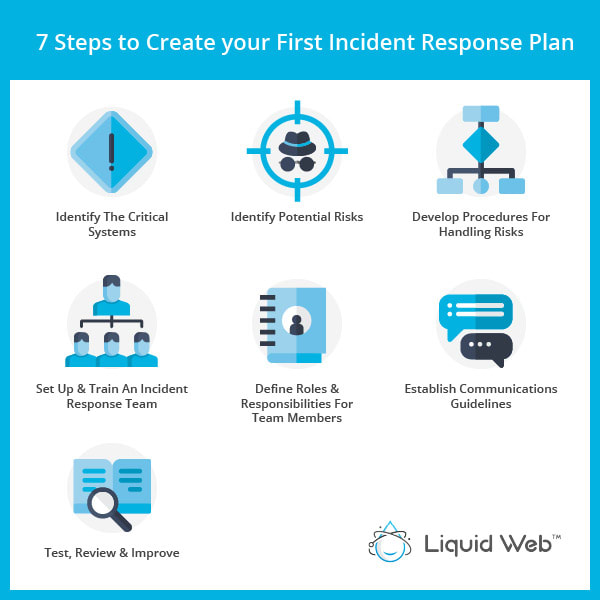
- Establish the Important Methods: Establish the programs which are most important to what you are promoting operations.
- Establish Potential Dangers: Establish the threats and dangers to your essential programs.
- Develop Procedures for Dealing with Dangers: Develop cybersecurity threat mitigation methods for these recognized dangers.
- Outline Roles and Duties for Incident Response (IR) Group: Outline particular roles for all IR crew members round your incident response plan actions.
- Set Up and Prepare IR Group Members: Inform and prepare respective crew members of their position’s necessities.
- Set up Communications Tips: Set up protocols for relaying info between IR crew members, different employees, and exterior stakeholders.
- Check, Evaluate, and Enhance: Usually check your incident response plan, and refine your plan primarily based on the outcomes.
3. Prepare Your Group
A latest research has proven that human error is chargeable for 85 % of information breaches which have occurred. One of the best ways to cut back the probability of your crew changing into a safety threat is to coach them often. This coaching ought to embody not simply your cybersecurity or IT employees however all members of your crew, as any considered one of them can turn out to be a weak level in your operations. You may mitigate safety threats from social engineering assaults corresponding to phishing and rip-off emails when correctly skilled.
- Embrace Cybersecurity in Onboarding: Embrace cybersecurity coaching in your onboarding course of for brand spanking new crew members.
- Common Coaching for Employees: Require all employees to attend refresher coaching applications often.
- Efficient Coaching Content material: The content material of your coaching program ought to increase consciousness on the best way to establish and reply to the safety threats your group faces.
- Stay-Hearth Drills: Have interaction workers in live-fire drills to follow the abilities they study.
- Administration Purchase-In: Get the buy-in of management-level employees to extend adoption.
- Replace Curriculum: Consistently replace your studying curriculum to incorporate new threats and cybersecurity threat mitigation methods for these threats.
4. Monitor and Shield Your Community Visitors
Poor community safety can result in all types of nightmare eventualities, so mitigating safety threats in your community ought to contain continuously monitoring your community visitors for intrusion makes an attempt. This monitoring applies to each outbound and inbound visitors, because it’s attainable for rogue workers to leak delicate info from inside your community. With correctly configured firewalls and risk intelligence programs, you may proactively detect malware, Denial of Service assaults, botnets, and man-in-the-middle assaults, stopping them earlier than they do any injury.
The best way to Mitigate Safety Threat: Guarantee your community features a firewall configured solely to permit visitors wanted in your operations. Permit solely directors to have entry to this firewall and make sure to allow logging of all community and administrative exercise on it. Additionally, use a digital non-public community (VPN) to encrypt connections between distant places.
5. Implement the Use of Robust Passwords
Passwords are used to verify id and management entry to restricted sources or info. Subsequently, the stronger your password programs are, the decrease your threat of unauthorized entry to delicate knowledge from weak or stolen credentials, man-in-the-middle assaults, phishing emails, and brute-force assaults.
The best way to Mitigate Safety Threat: Introduce a robust password coverage requiring minimal password size and complexity for all accounts and two-factor authentication the place attainable. Your password coverage must also embody scheduled password modifications and account lockouts after repeated login failures. As well as, introduce utilizing password managers to stop folks from storing passwords insecurely.
6. Set up Safety Patches and Updates
The distributors chargeable for working programs, antiviruses, and different widely-used software program continuously launch updates for his or her merchandise. Whether or not they add new options or mitigate safety threats, these updates are important to the continued use of those functions. Putting in these updates can shield you from newly found viruses, malware, and third-party vulnerabilities.
The best way to Mitigate Safety Threat: Automate the updates for antivirus and malware applications to make sure they obtain their definitions on time. As well as, schedule essential safety patches for working programs to put in when accessible. Lastly, for extra delicate programs, make sure to run updates on check situations earlier than deploying them to your dwell atmosphere.
7. Encrypt and Backup Your Knowledge
Backups are essential to making sure enterprise continuity after a disaster. Encryption provides one other layer of safety in your backups, defending your delicate info from unauthorized entry. With these cybersecurity threat mitigation methods in place, you may simply forestall knowledge loss from ransomware assaults, knowledge breaches, or human error.
The best way to Mitigate Safety Threat: Your backup and encryption plan ought to embody the next steps:
- Distant Storage: Use distant storage in your backups.
- Backup Frequency: Schedule backups to occur incessantly.
- Knowledge Retention Schedule: Create a schedule for knowledge retention to handle how lengthy you retain your backup recordsdata.
- RAID for Knowledge Storage: Retailer your backups in RAID arrays for improved efficiency and redundancy. Nevertheless, RAID arrays shouldn’t be used as a main backup answer.
- A number of Backups: Use a number of backup options for improved backup restoration choices throughout a catastrophe.
8. Don’t Neglect Bodily Safety
For organizations that host their IT infrastructure, the safety of those bodily internet hosting places is simply as essential as their digital safety. By bettering your bodily safety as a part of your cybersecurity threat mitigation technique, you may scale back the danger of social engineering assaults, bodily theft, and disgruntled workers seeking to trigger chaos.
The best way to Mitigate Safety Threat: Just a few steps to reinforce bodily safety embody:
- Prohibit Permissions and Log Exercise: Prohibit server entry to solely directors and log all server exercise.
- Use Safety Cameras and Doorways: Set up cameras and safety doorways in places that deal with delicate info.
- Disable Bodily Ports: Disable bodily ports on servers and forestall unsecured units from accessing your community.
- Gear Safety Coaching: Prepare your employees to be security-conscious with their gear, together with units that fall below a deliver your individual system (BYOD) coverage.
- Stolen/Lacking System Coverage: Set up procedures for disabling stolen/lacking units.
9. Monitor Your Distributors
Chances are high your group makes use of some services or products from an exterior vendor for its operations. Subsequently, the safety posture of those organizations can influence your organization’s cybersecurity readiness, particularly if their providers play a essential position in your operations. Third-party vulnerabilities are a standard assault vector for hackers who goal fashionable software program programs.
The best way to Mitigate Safety Threat: To scale back your publicity to those sorts of assaults, it’s best to set a minimal customary for safety that distributors should meet and monitor for compliance. Additionally, ensure that they meet the authorized rules in your business earlier than you proceed. Lastly, at all times have backups of your knowledge and redundancy plans in case of a system failure on their finish.
10. Be Compliant with Trade Rules
Regulatory businesses for varied industries perceive the very important position cybersecurity performs in serving to their sectors thrive in at this time’s world. That’s the reason they implement strict compliance with their info safety rules for his or her stakeholders. A very good instance is the Fee Card Trade Knowledge Safety Commonplace (PCI DSS), which supplies cybersecurity threat mitigation methods to stop bank card fraud and unauthorized entry to delicate knowledge.
The best way to Mitigate Safety Threat: Establish the cybersecurity rules required in your business and evaluate the compliance necessities to see what steps it’s best to take to achieve full compliance. Pay attention to any actions involving exterior auditors’ validation to verify compliance.
How Liquid Internet Can Assist with Safety
The steps outlined above are an ideal start line for constructing your safety infrastructure. Nevertheless, if you wish to keep forward of recent and rising threats from malicious actors, then your cybersecurity threat mitigation methods have to be adaptable. With a long time of expertise constructing and internet hosting safe infrastructure, Liquid Internet can present the infrastructure and safety experience that reduces your publicity to previous and new cybersecurity threats.