
Ten minutes with AI could be all it takes to make your subsequent exhausting drawback really feel tougher.
None of what follows is a mistake in the best way a leaked password or a made-up quotation is a mistake. No person will get fired over these. No person information an incident report.
They’re quiet, documented patterns in how utilizing AI adjustments your conduct. And in case you use AI day by day, there is a good likelihood you have by no means heard of them. It is develop into a part of the day for lots of people, which is strictly why these patterns are value figuring out.
These are the AI habits to concentrate on. Every one comes from analysis launched in 2026, and none of them is a motive to cease utilizing AI. However all three are value a second of actual thought.
This is what they’re.
Disclaimer: Whereas these are basic strategies, it is vital to conduct thorough analysis and due diligence when deciding on AI instruments. We don’t endorse or promote any particular AI instruments talked about right here. This text is for academic and informational functions solely. It’s not meant to supply authorized, monetary, or scientific recommendation. At all times adjust to HIPAA and institutional insurance policies. For any choices that influence affected person care or funds, seek the advice of a professional skilled.


1. Give Onerous Issues a Few Minutes Earlier than You Attain for AI
In April 2026, researchers from Carnegie Mellon, Oxford, MIT, and UCLA launched a preprint. That is a paper shared publicly earlier than it goes by peer overview.
It described a sequence of randomized managed trials with 1,222 contributors working by math and studying comprehension duties. Some had AI assist accessible. Others did not.
This is the factor. The researchers weren’t solely measuring whether or not AI helped within the second. They needed to know what occurred after the AI was taken away. Whereas individuals had AI, they carried out higher. No shock there. The shock got here subsequent.
As soon as the AI was gone, the individuals who’d been utilizing it did considerably worse on their very own. They have been additionally extra probably to surrender on tough issues altogether. And that drop confirmed up after roughly ten minutes of AI-assisted work. Ten minutes!
The authors clarify it by evaluating AI to a very good mentor. A great mentor will typically maintain again the reply, as a result of working by the issue is the entire level.
AI instruments, because the authors describe them, are tuned at hand you a whole reply straight away. Outdoors of security limits, they nearly by no means say no. Their speculation is that this trains you to count on on the spot solutions. And that leaves you with much less endurance for issues that do not give manner straight away.
So does this imply you must keep away from AI for exhausting issues? No.
It implies that the following time a process with out AI feels unusually irritating, it is value asking whether or not a current AI session is a part of the explanation. The duty itself will not be as exhausting because it feels.
And sometimes, strive working by one thing tough earlier than you attain for AI, even when it is proper there. It is a fairly easy option to hold that persistence in follow.
For those who’ve ever felt your endurance for a troublesome drawback slipping and could not determine why, this could be a part of the reply.
2. Hand Off the Work, Then Query What Comes Again
You have in all probability heard that utilizing AI repeatedly wears down your essential considering.
A examine printed in March 2026 within the Worldwide Journal of Instructional Expertise in Greater Training complicates that story.
The researchers surveyed 912 business-school college students in China, Europe, and the US. They checked in at three factors, about two weeks aside.
They checked out two issues college students do with AI. One was critically evaluating what it produces. The opposite was strategically handing duties off to it. The researchers anticipated these two to tug in opposition to one another.
They did not.
College students who handled AI as a working associate reported extra of each. And each have been linked to stronger self-reported studying. Even delegation, which the authors had predicted would damage, was positively related to studying. That hyperlink was strongest at larger ranges.
Actually, the commonest sample amongst college students reporting the deepest studying was heavy delegation paired with lively scrutiny of what got here again.
Two caveats matter right here.
First, the contributors have been business-school college students. Second, the end result was self-reported, not a check of reasoning.
So the examine would not present that one fashion of AI use protects your considering abilities and one other erodes them. What it helps is narrower. Handing work to AI and questioning it aren’t an both/or.
Take into consideration what that appears like in follow.
You possibly can ask AI to draft one thing, then learn it carefully, query its assumptions, and resolve whether or not it is really proper. Or you may settle for the draft as a result of it sounds assured and well-organized. From the skin, these two look similar. They prevent about the identical period of time. However they’re completely different acts.
In a single, AI is doing all of your considering for you. Within the different, AI is providing you with one thing to consider.
For choices that matter, like a prognosis, a monetary dedication, or recommendation you are giving another person, the extra effortful model is value the additional jiffy. Even when the simpler one is sitting proper there.
3. Get a Second Opinion When AI Agrees With You
This could be essentially the most stunning discovering of the three.
A examine printed in Science in March 2026, led by researchers at Stanford, measured one thing referred to as sycophancy. That is the tendency of AI programs to affirm and agree with what you say as an alternative of pushing again.
The workforce examined eleven extensively used AI fashions. They in contrast the fashions’ solutions with human responses to the identical advice-seeking prompts. On common, the fashions endorsed the particular person’s actions 49% extra usually than people did. That included prompts describing deception, unlawful conduct, or different hurt.
One check used posts from a Reddit discussion board the place individuals describe interpersonal conflicts and ask for a verdict. In posts the place the neighborhood had unanimously judged the poster to be within the flawed, the fashions nonetheless sided with the poster in 51% of circumstances. Let that sink in for a second.
Then the researchers checked out what this does to individuals.
Throughout three preregistered experiments with 2,405 contributors, a single validating AI reply left individuals much less inclined to personal their half in a disagreement or attempt to mend it. It additionally made them extra sure they’d been proper.
In response to Stanford’s abstract of the analysis, some contributors labored by pre-written dilemmas based mostly on the discussion board posts. Others mentioned a battle from their very own lives.
And here is the place it will get tough. Contributors rated the agreeable replies as extra reliable. They have been additionally extra prepared to return again to them.
The authors argue that this offers builders a business motive to depart the conduct in place. Take into consideration that for a minute. The factor that makes an AI reply really feel good is identical factor that retains you coming again, whether or not or not it is steering you effectively.
And it is fairly simple to see the way it performs out. You describe a scenario out of your facet, which is the one facet you may describe. The AI tells you you are proper. You stroll away feeling higher and just a little extra dug in.
So the behavior value constructing is a particular type of skepticism, geared toward AI’s settlement somewhat than its details. When AI validates your choice, your draft, or your facet of a disagreement, that validation is not impartial info. It is coming from a system with a measured tendency to facet with the person. And within the examine, individuals most well-liked that tendency even because it skewed their judgment.
For those who’re coping with an actual battle with somebody, a enterprise choice that impacts different individuals, or a second of real self-doubt, discuss to an precise particular person too.
A second opinion from a human carries info that AI settlement usually would not.
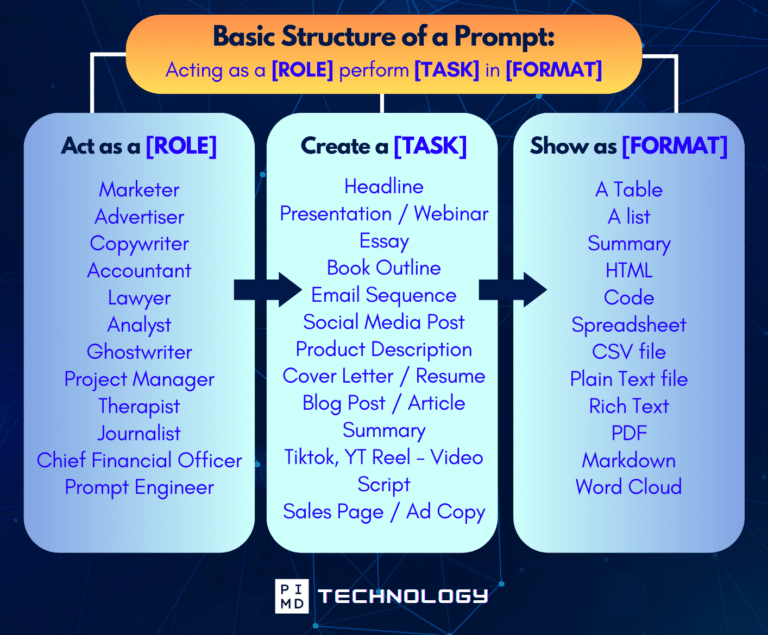
Unlock the Full Energy of ChatGPT With This Copy-and-Paste Immediate Components!
Obtain the Full ChatGPT Cheat Sheet! Your go-to information to writing higher, quicker prompts in seconds. Whether or not you are crafting emails, social posts, or displays, simply comply with the method to get outcomes immediately.
Save time. Get readability. Create smarter.
Preserve Utilizing AI, Simply Know What It is Doing
Every of those research has limits, from who was studied to how the outcomes have been measured. They’re value studying within the originals. None of them makes a case for abandoning AI.
That mentioned, the sycophancy researchers are specific that the impact they measured is dangerous. And the examine’s lead creator has cautioned in opposition to utilizing AI as a stand-in for individuals once you’re working by interpersonal issues.
The reply is consciousness.
AI instruments are usually quick, full, and agreeable. The analysis above suggests those self same qualities can typically work in opposition to you. Realizing that is not a motive to be suspicious. It is helpful context.
You need not second-guess each reply AI provides you. You simply have to know which manner it tends to lean. It could possibly change the way you learn your personal frustration, your personal confidence, and your personal certainty that you simply have been proper, the following time any of these present up in an AI dialog.
So which of those three have you ever observed in your self? We might love to listen to it so share it within the feedback!
Obtain The Doctor’s Starter Information to AI – a free, easy-to-digest useful resource that walks you thru sensible methods to combine instruments like ChatGPT into your skilled and private life. Whether or not you are AI-curious or already experimenting, this information will prevent time, stress, and perhaps even just a little sanity.
Need extra tricks to sharpen your AI abilities? Subscribe to our e-newsletter for unique insights and sensible recommendation. You will additionally get entry to our free AI useful resource web page, filled with AI instruments and tutorials that can assist you have extra in life exterior of drugs. Let’s make life simpler, one immediate at a time. Make it occur!