

That is an excerpt from our free-to-download report, eCommerce in Publishing: Traits & Methods
On this chapter, we look at the rising prominence of eCommerce in publishers income methods and the function that COVID-19 has performed in accelerating this pattern.
A longtime income formulation
For a lot of publishers, affiliate relationships will probably be their first – and sometimes main – foray into eCommerce.
As eMarketer has defined, these revenues come from “commissions earned on conversions or clicks they drive to a model or retailer by affiliate hyperlinks positioned in content material on their websites or different channels, like their social media accounts and e mail newsletters.”
“It’s a monetization mannequin,” Shopify observes, “the place an affiliate companion… is rewarded a payout for offering a particular consequence to the retailer or advertiser.” “Sometimes, the result’s a sale. However some applications can reward you for leads, free-trial customers, clicks to an internet site, or getting downloads for an app.”

Globally, the affiliate market – which encompasses cashback and reward websites, in addition to publishers and different content material creators, social networks and different supply mechanisms – is value over $12 billion a yr. Within the U.S. alone, affiliate internet marketing spend is projected to succeed in $8.2 billion in 2022, up from $5.4 billion in 2017. Put merely, with values like these, that is too massive a marketplace for publishers to disregard.
Affiliate income’s COVID bump
Previous to the COVID-19 pandemic, quite a few publishers – reminiscent of BuzzFeed, Condé Nast, Meredith, Hearst, and Vox Media had been already embracing the potential for eCommerce, and particularly the alternatives for producing affiliate income.
Nonetheless, with the COVID disaster appearing as a catalyst for elevated on-line purchasing, extra publishers – and entrepreneurs – have embraced this house. The transfer appeared to pay dividends for a few of these corporations.
By August 2020, in response to Dunia Silan, VP Income for Europe, the Center East and Africa at Skimlinks – an affiliate internet marketing platform – the Prime 50 U.Ok. publishers generated £86 ($113.42) in common income per article, up by greater than 100% up to now 5 months.
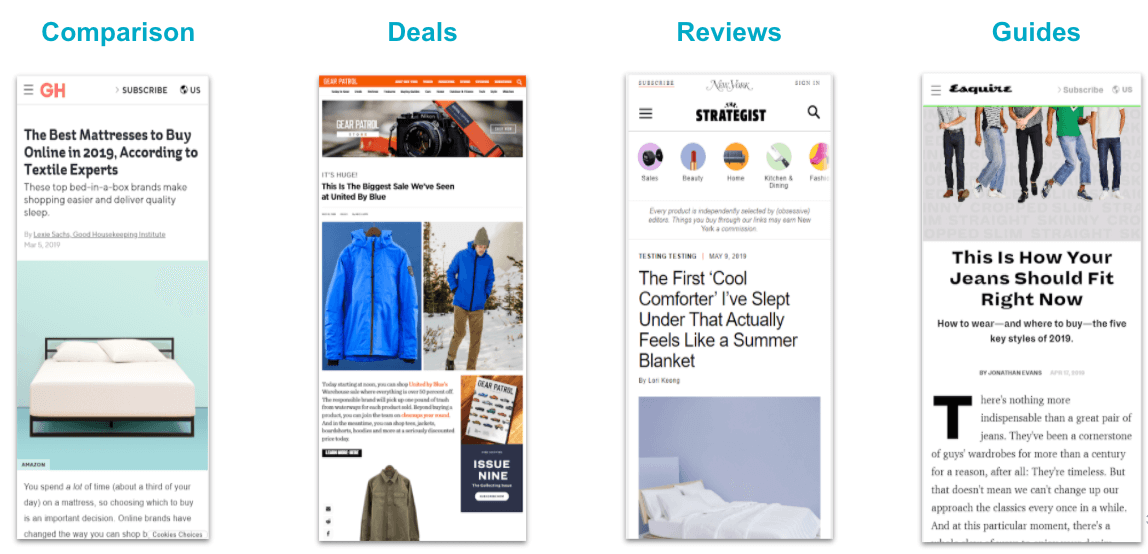
They weren’t alone on this success. On the opposite aspect of the pond, New York Journal’s purchasing web site, The Strategist, noticed an 85% year-over-year enhance in income in the course of the second quarter in 2020. Hearst UK noticed even greater numbers, witnessing 322% development in eCommerce income for a similar quarter in comparison with the identical interval a yr beforehand. Former Shopify CTO Jean-Michel Lemieux tweeted in April 2020 that “our platform is now dealing with Black Friday degree visitors daily!”
Though these record-breaking numbers had been a by-product of a really particular time interval, the eCommerce momentum loved by many publishers has continued (albeit at a slower fee). Future plc’s interim outcomes for the six months as much as the top of March 2021, for instance, famous that their eCommerce affiliate revenues had been up 116% (value £85.2 million) in comparison with 2020.
Because of longitudinal shifts in client habits and the continued development of spending on this house by entrepreneurs and types, contemporary forays into eCommerce, and affiliate income methods, proceed to be seen from all kinds of various publishers.
Affiliate approaches in motion
Maybe the obvious instance of how by which publishers are earning money by affiliate revenues might be seen within the rise of advice websites and verticals.
Within the U.Ok, The Solar, a British tabloid, now employs 5 individuals devoted to producing Solar Selects, a group of shopping for guides and product suggestions, in addition to 10-15 freelancers.
At one other British outlet, The Impartial, their Indy Finest part has continued to develop, partly attributable to COVID-era purchasing habits. The positioning, which provides product evaluations and shopping for guides, “doubled the scale of the crew… to 16 individuals, together with ten full-time editorial roles, in the course of the pandemic,” Press Gazette has reported.
“This [affiliate marketing] is a long-term dedication, and was earlier than the pandemic,” mentioned the Impartial’s managing director Christian Broughton. “We’re accelerating as quick as we are able to to develop this and I don’t anticipate it’s going away.”
Alongside conventional affiliate approaches – reminiscent of devoted overview sections and embedding purchasing hyperlinks in particular articles (see, for instance, these articles on BuzzFeed highlighting the most effective ladies’s white t-shirts, bathroom paper and bathe curtains) – a number of publishers are additionally establishing on-line outlets. These digital shops can take quite a few totally different varieties, together with these targeted on producing affiliate gross sales.
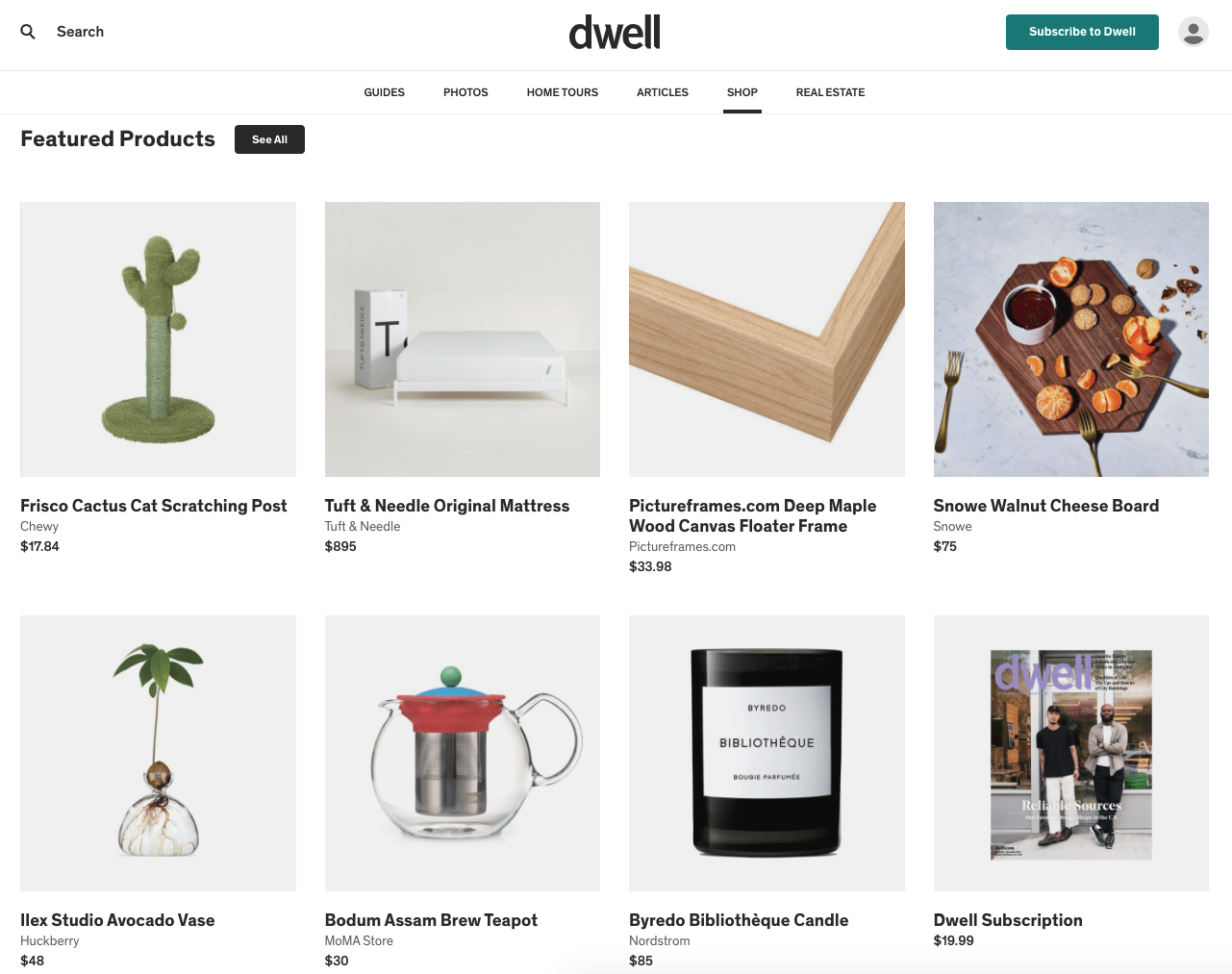
The house design journal Dwell, is only one publication that has adopted this strategy. Apart from providing articles, guides to varied residence tasks and hyperlinks to contractors, their web site additionally options an on-line store that gives “expertly curated choice of finely crafted residence, workplace, journey, and life-style merchandise.” Clicking on an merchandise in Dwell’s retailer takes you thru to the third-party vendor the place you’ll be able to full your sale.
What’s subsequent? How affiliate relationships are altering
The longer term for affiliate revenues provides one thing of a combined bag for publishers.
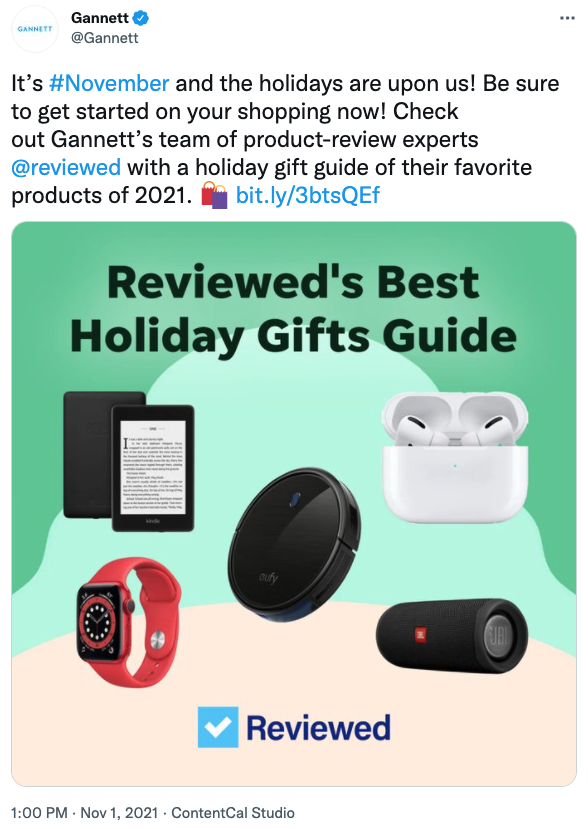
On the one hand, you might have an rising variety of gamers – like Vice – shifting into this house. Others like Gannett, have expanded their operations, whereas the New York Occasions’ resolution to place their overview web site, Wirecutter, behind a paywall (and to supply a standalone subscription for it) displays the boldness they’ve on this product.
In the meantime, the emergence of affiliate expertise and networks like these provided by corporations reminiscent of Tipser, Skimlinks, Sovrn and Rakuten, can do a lot of the exhausting technical work for publishers – providing CMS and different digital options to help eCommerce exercise – in addition to appearing because the conduit between publishers and retailers.
On the similar time, publishers additionally should be cautious of placing all of their eggs in a single (on-line purchasing) basket. The choice by main retail companions like Amazon and Walmart to minimize the fee they pay their affiliate companions, could impression a writer’s backside line and the effectiveness of their affiliate technique.
Publishers additionally should be cognizant of the truth that on-line habits are altering, and there are a number of ways in which they’ll generate eCommerce income. As we will see, affiliate revenues are usually not the one sport on the town.
Shops like BuzzFeed, for instance, are experimenting with direct-to-consumer choices, enabling audiences to buy immediately from their web site – or social feeds – with out having to click on away to a 3rd get together.
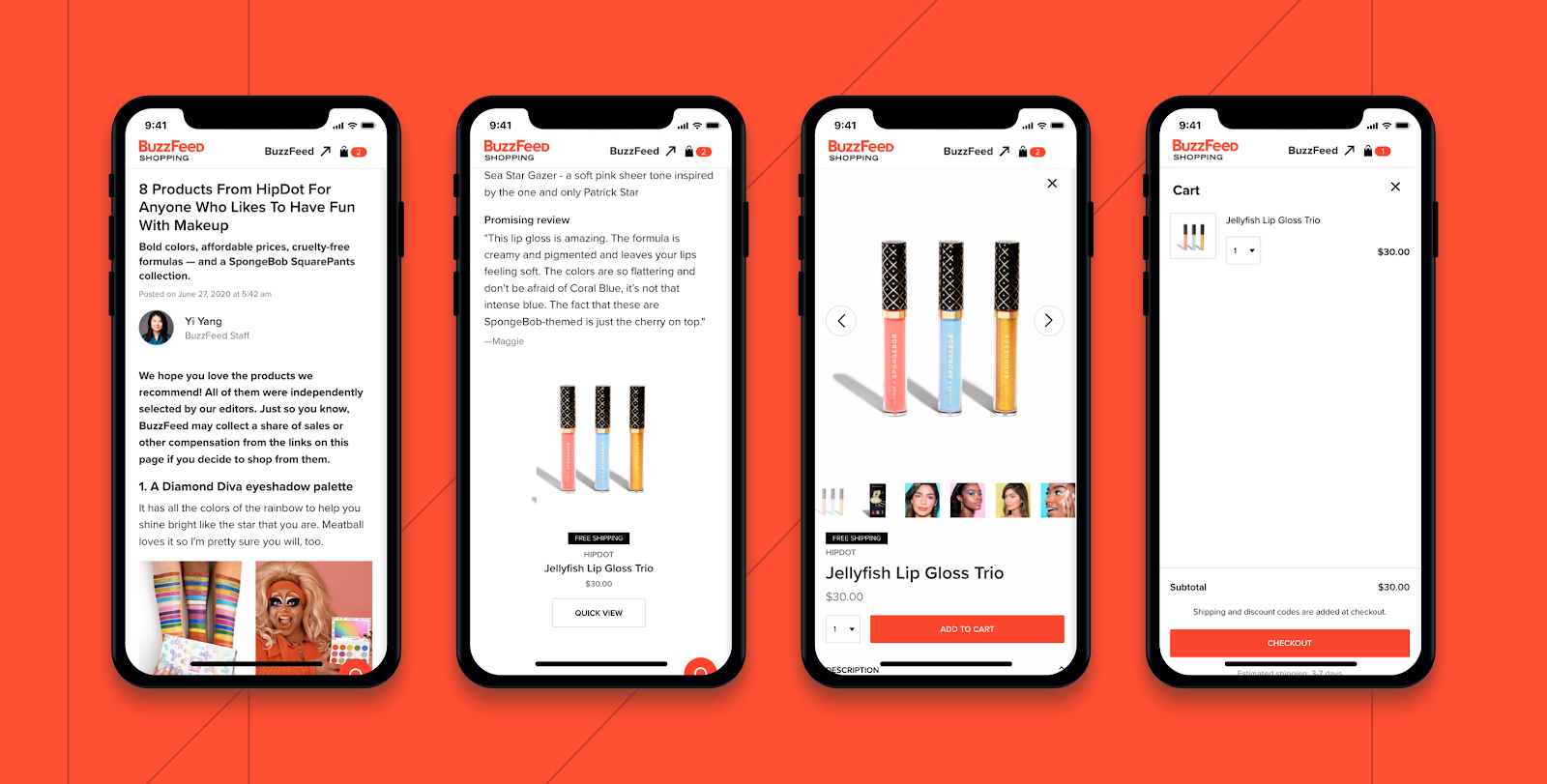
Furthermore, as on-line purchasing on social networks turns into extra commonplace (these platforms are already influential in shaping many buying choices), so publishers might want to refine their affiliate methods by factoring in affiliate and eCommerce alternatives throughout their social channels too.
All of that is to say, as Internet Writer PRO put it, “though affiliate internet marketing will not be a silver bullet, it may be an vital a part of a writer’s bigger strategy to web site monetization.”
Specifically, they word, “digital publishers are seeing the best beneficial properties once they mix real-world occasions (just like the pandemic or upcoming seasonal climate occasions) with on-line retail.”
That is notably true round main purchasing intervals, reminiscent of Black Friday, Cyber Monday and Singles Day, foci which are already vital income peaks for quite a few publishers.
“Over the previous three years, Meredith has seen greater than 100% year-over-year development in affiliate income [thanks to commerce content],” disclosed Chloe Reznikov, Common Supervisor of Commerce Content material and Technique at Meredith Company, just lately. “Throughout the 2020 vacation season, Meredith drove $35 million in Prime Day gross sales and $36 million in Black Friday/Cyber Monday gross sales by way of our commerce content material program.”
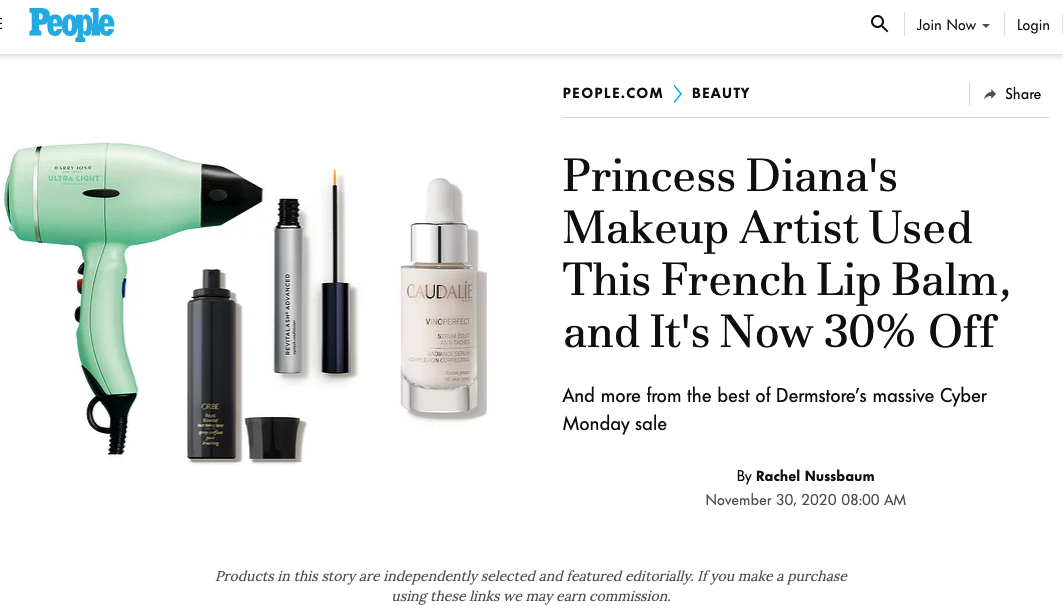
What we’re seeing, subsequently, is an more and more busy affiliate house, as an ever-growing variety of publishers muscling into this house.
Elevated competitors from different media corporations, the emergence of social commerce and the power to buy on social networks, coupled with a have to keep away from overreliance on a single companion or platform, are all strategic concerns that publishers should be cognizant of.
However, this can be a rising client market too. And audiences have gotten more and more used to seeing affiliate hyperlinks alongside the content material they’re consuming. Consequently, due to the industrial and content material alternatives affiliate income can generate, it’s clear that affiliate income will proceed to be a part of publishers’ eCommerce methods for a while to return.
Initially printed in What’s New in Publishing earlier this yr. Whereas a few of the knowledge factors could have developed, the evaluation and conclusion stay extremely related.

By Damian Radcliffe
Damian Radcliffe is the Carolyn S. Chambers Professor in Journalism on the College of Oregon, a fellow of the Tow Heart for Digital Journalism at Columbia College, an honorary analysis fellow at Cardiff College’s College of Journalism, Media and Tradition Research, and a fellow of the Royal Society for the Encouragement of Arts, Producers and Commerce (RSA).
He’s an skilled digital analyst, guide, journalist, and researcher who has labored in editorial, analysis, instructing, and coverage positions for the previous twenty years within the UK, Center East, and USA.
Damian is a daily author, commentator and speaker on digital tendencies, social media, expertise, the enterprise of media, and the evolution of journalism. Comply with him on Twitter @damianradcliffe and see hyperlinks to his work by way of www.damianradcliffe.com and
http://journalism.uoregon.edu/member/radcliffe-damian/
