


My goal, proper right here, is that can assist you to create a podcast within the shortest time potential.
And I’m not simply speaking about any outdated podcast. I imply a nice podcast. Your very best podcast!
As a result of that is the place so many individuals get caught out. It’s the place exhibits go to die. The podcaster spends an excessive amount of time making each episode. A lot that it simply would not match into their week and even their life. By that time, it simply drains all of the enjoyable and worth out of your complete present!
After all, it’s price noting that various kinds of exhibits take totally different quantities of time to supply (go ask an audio drama producer how a lot time they spend on dialogue enhancing alone!). And typically, spending extra time in your present can enhance the standard, or what you get out of it. However, that’s provided that you spend that point on the fitting stuff. And I imagine it’s potential to do these proper issues in far much less time than you assume.
So that is what I’ll do on this article: present you the very best of these “proper issues” and show you how to create the very best product within the least potential time.
Who I Am and What You’ll Study
By the use of a fast “who the heck’s this man?”: my title is Colin Grey, and I’m a podcaster, author, trainer, and basic dogsbody at The Podcast Host. We create a community of our personal exhibits and assist hundreds of others produce their very own by way of our content material.
Plus, we run a podcast maker instrument referred to as Alitu. The entire goal behind Alitu is to supply recording, enhancing, and publishing instruments that automate and simplify, making it far faster and simpler to create your present. And a number of that relies on the “proper methods” that I’ll speak about right here.
Over the previous ten years, I’ve gone from becoming a podcast round a very totally different regular job (instructing lecturers learn how to educate — meta, huh?), to attempting to suit as many podcasts as potential into my present job and designing instruments to assist others do it faster!
It was all about slicing out the cruft and determining what’s actually worthwhile in making a high-quality, profitable present. I’ll speak about all these insights right here, together with:
- How one can plan content material within the minimal time, and in a means that makes it simple to ship
- How one can get probably the most from the whole lot you do create
- Recording & enhancing methods to save lots of time
- How one can discover and be taught the instruments that reduce down on processing time
So, let’s get into it. Time to use a little bit lightning to your podcast!
Why Seasons are Rocketfuel for You and your Viewers
Seasons-based podcasting is probably the most underrated workflow hack within the business. And, even higher, it’s a large driver of listener success, loyalty, and viewers progress, too.
How? Effectively, there are three causes.
Planning Nirvana
You already know if you flip up at your desk for recording time and assume: “Alrighty … podcast time. I’ve bought an hour to get this child recorded! Soooo … what shall I speak about … ”
An hour later, you’re nonetheless solely midway by way of planning the episode. And even worse, you’re nonetheless looking at a clean display screen, attempting to consider an thought.
Effectively, right here’s a brand new tack: take an hour of your life and take into consideration your subsequent season as a substitute.
Take a query you typically get out of your listeners, or a subject you wish to cowl, after which break it down. One of many largest errors we make as podcasters is attempting to suit an excessive amount of into an episode. We do it as a result of we care. We wish to give a number of worth, however truly, it’s shortchanging your listeners, typically lacking particulars, or giving them an excessive amount of to consider . As a substitute, break that subject down into its part components.
I did a season on podcast tools some time again. I might have simply lined it in a single episode however it’s higher to interrupt it down. One episode on microphones, one on mixers, one on recording software program, and one on enhancing software program.
Usually I can work this out in lower than ten minutes for a subject I do know properly. Possibly 20 to 30 if I have to do a little bit of analysis. I’ll find yourself with a listing of perhaps six or seven episodes, typically as much as 15 or 20.
Then, I’ll take one other 20 minutes to place some meat on them bones, and do a set of 5 to 10 bullet factors inside every major subject, outlining what I’ll cowl.
By the tip of the hour (or much less!) I’ve bought a plan for a whole season’s price of content material, typically two or three months lengthy, perhaps extra.
So now, as a substitute of the same old, “Oh no! What do I speak about this week!”, subsequent time you open up that season plan, take a look at the subsequent episode’s script and hit document. Simple!
And sure, this may nonetheless work for interview exhibits. Do the entire above, and solely THEN begin to consider company. This makes for a lot higher content material. As a substitute of simply selecting out random pseudo-famous individuals in your area of interest, only for their title, select based mostly on experience and data.
Search round for weblog posts protecting the subjects you’ve gotten in your plan. Discover individuals with attention-grabbing angles on these subjects, after which invite them on the present. You’ll create much better, way more targeted content material in consequence.
Higher Batching
With a season plan, you possibly can actually simply benefit from one other large timesaver: batch recording.
Matthew is my co-host on our “learn how to podcast” present, Podcraft. It’s a seasons-based present, and we’ve lengthy recorded it in batches. We co-host the podcast, so we are able to plan a season collectively, after which we’ll document two to 3 episodes at a time.
I do know individuals who can do 4 episodes in a single sitting, however we at all times discover we hit a wall round three. Nonetheless, which means we solely have to rearrange recording time each two or three weeks, relatively than each single week.
Modifying could be batched, too. As anybody who has to do a number of activity switching is aware of, doing just a few of all of them collectively takes far much less time than three separate enhancing classes.
Listener-Powered Content material
Each podcaster is aware of they need to be getting their listeners extra concerned with their present. It drives engagement, loyalty, and big listener progress. However, it’s an enormous time suck … monitoring emails, social media, and voicemails each single week could be draining.
Seasons put one thing model new in your toolbox: a break!
On the finish of the season, you say: “Okay, thanks for listening! We’ll be again in 6 weeks, on August 1st. Throughout that point, although, right here’s what I would like you to do. We’re going to cowl podcast tools on the subsequent season. Inform me, what gear are you utilizing proper now? What gear have you ever tried that was garbage? What are your largest struggles or questions with tools that I can reply? Ship me a tweet,or an e mail, or (better of all) go away a voicemail at ..”
Then you definately take a well-earned break!
In the direction of the tip of the break, you possibly can batch-process all of this. Take a day to gather all of it collectively, collate the tweets and the emails, and course of the audio recordings so it’s all prepared for the brand new season. That is a lot simpler and extra environment friendly than doing little drips and drabs each few days.
Even higher, this may energy the planning we talked about above. The questions will direct your episodes, and you’ll plan forward, together with all of the related questions in the fitting episode. In that means, you embody and contain your listeners within the present and drive an enormous quantity of worth and loyalty. Plus, you create higher content material as a result of it’s based mostly on the ideas of actual individuals.
Fly Solo (At Least a Little)
This one makes individuals a little bit nervous, at the least for people who usually fly with a visitor! Recording alone is likely one of the largest time-saving strikes you can also make, significantly when you’re an everyday interviewee on different exhibits.
Should you’ve by no means tried it, think about a world the place you don’t must coordinate calendars to discover a time that fits everybody. Think about planning the episode your self, realizing that you simply don’t must immediate your co-host or assume of some backup questions in case that interview goes awry. Think about having one hundred pc management over what’s stated (since you’re doing the saying!), so there are not any tangents, no fluff and no … enhancing? Think about simply deciding to document, off the cuff, and 20 minutes later, you’ve gotten an episode within the bag.
All of that’s potential with solo recording, plus the additional advantage of showcasing your individual data and expertise for a change, relatively than your visitor (I’m speaking about interview exhibits particularly).
Should you haven’t tried it, take one episode a month and fly solo. See how a lot time it saves you and the way your listeners would possibly like to listen to what you assume, for a change.
The Minimal Efficient Modifying Course of
Okay, we’ve deliberate it out and we’ve recorded an episode. Now comes probably the most harmful of potential time-eaters: enhancing.
I nonetheless come throughout so many individuals who spend 2x or 3x the size of their present in enhancing. For instance, taking two or three hours to edit a one-hour recording. I even meet individuals who spend 5x to 10x the size of their present in manufacturing! It’s simply unsustainable.
A part of that’s dialogue enhancing, listening by way of the entire thing to seek out and eradicate their errors. Painful! We’ll deal with that within the subsequent tactic.
The opposite half is audio engineering; particularly audio cleanup, including music or adverts, layering tracks, and exporting the entire thing.
So, how will we make it simple? By including constraints. You are able to do a lot much less by making use of the fitting mindset to your enhancing. I’ve bought two processes right here so that you can strive.
MEE (Minimal Efficient Modifying)
That is good for early-stage podcasters. I typically advocate following this to your first 10 to twenty episodes, at a minimal. There’s a lot you’re studying throughout these first months, and enhancing actually is low on the affect record. There’s a lot extra worth in working in your presentation and content material design abilities. (Actually, you may prolong this mindset to any podcaster at any stage.)
Merely reduce enhancing down to 2 issues, and two issues solely:
- Trim
- Normalize
Trim means trimming the beginning and the tip solely. Often which means slicing out the silence and the paper rustling after you hit document and earlier than you begin talking. Then, do the identical for the tip.
Normalize means leveling out the quantity of your present. That is the one and solely “audio engineering” activity that’s important. It means your present gained’t be too quiet, and the quantity of the totally different audio system ought to be comparatively even so that you don’t have your listeners reaching for his or her quantity management each time the speaker modifications.
Most enhancing instruments have normalization options included, reminiscent of Audacity.
Discover that this doesn’t embody dialogue enhancing in any respect. So, you possibly can’t reduce out errors! That’s a constraint that has just a few advantages:
- You’ll be able to’t use enhancing as a crutch, so that you be taught to enhance the best way you converse, quick! Study to drop the ums and ahs whereas you converse, not afterward.
- You keep away from this time-warp rabbit gap altogether as a result of even a little bit “Oh I’ll simply take away that one factor” can flip into an hour of enhancing.
- You sound extra human. “Oh, sorry, that’s not what I meant! <giggle> Let me say that once more.” That is trustworthy. Open. Relatable. Individuals establish with you extra carefully.
As a substitute, document with a “reside broadcast” mindset. Faux you’re reside on air, the present has to go on. There’s an opportunity you’ve achieved that very factor — Fb, YouTube, Instagram — and survived! So take it into your podcasting, and reap the time-saving advantages. even when simply to your first few episodes.
MEE-V2
Later in your podcasting profession, you would possibly determine you do wish to add a bit extra polish. Whether or not that’s episode 20 or 200, right here’s the 2nd stage: MEE-V2.
- Trim
- Click on Edit
- Noise Discount
- Restrict and Normalize
- Add Music
- Overlap and Fades
That polish comes primarily within the type of music: including your individual audio branding, and placing in some pro-sounding overlaps and fades.
MEE-V2 additionally consists of an additional couple of audio engineering steps. A exhausting restrict helps to enhance your audio leveling, and noise discount is an enormous assist for many of us who’re recording in bog-standard rooms relatively than recording studios.
We’re not delving into a number of the audio engineering that you simply’ll discover across the podcasting internet, reminiscent of EQ, compression, de-essing, or plosive removing. These are helpful of their place, positive, polish to your audio — however they’re non-essential.
Lastly, you’ll discover the point out of a click on edit. Sure, I hear you breathe a sigh of reduction: now you possibly can take away just a few errors out of your audio. However solely the massive ones that basically can’t keep in! We nonetheless wish to keep that live-recording mindset to remain human, and we’ll use a click-edit course of that slashes the time required to finish. You’ll see that within the subsequent tactic.
MEE-V3?
Earlier than we transfer on, I’ll point out one other chance right here. You’ll be able to automate an entire lot of MEE-2 and add much more polish utilizing the fitting instruments.
I got here up with MEE years in the past in an try to assist our readers defeat the monster that’s enhancing. However, even then, it was nonetheless a activity that dragged exhibits underneath.
So, we constructed our personal instrument, Alitu, to automate MEE-2, after which so as to add an entire lot extra polish and help on high.
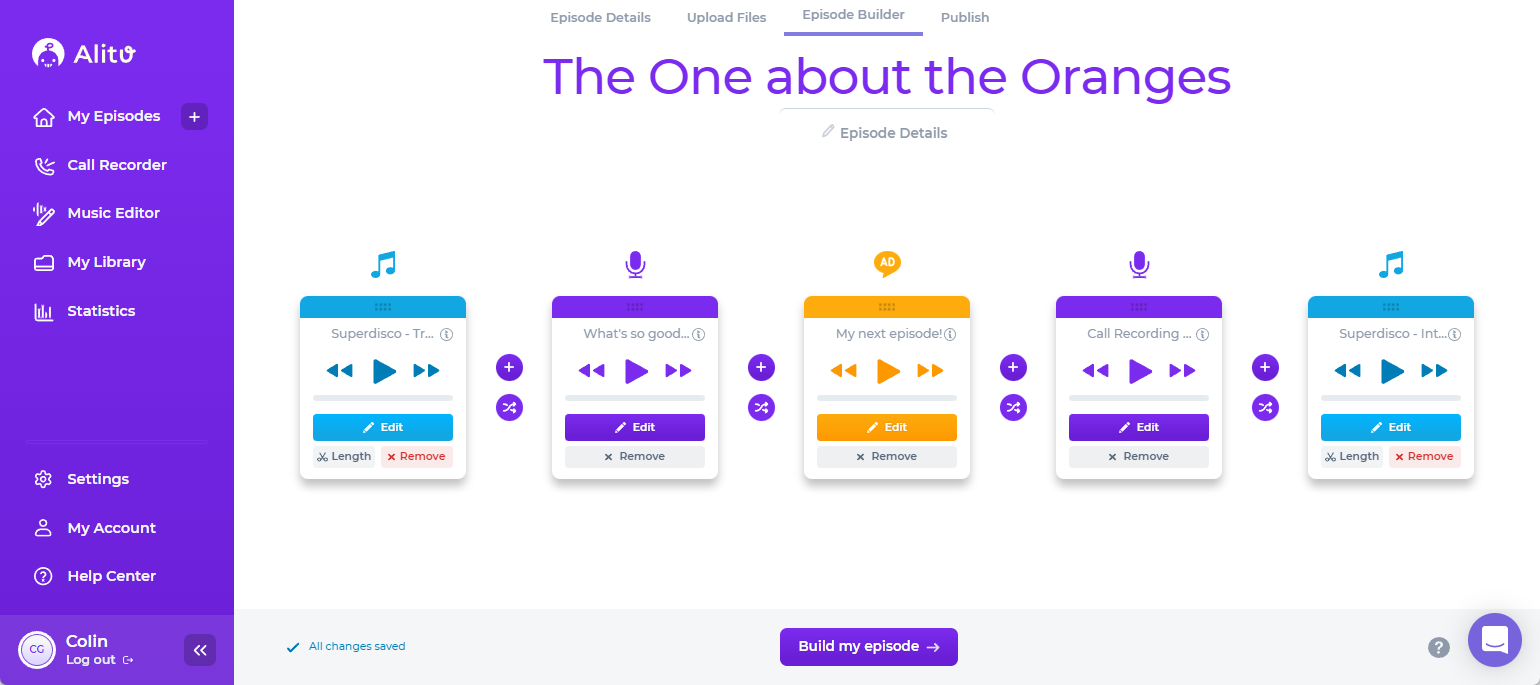
For instance, inside Alitu you possibly can document a solo episode, or use our name recorder to usher in a visitor. That recording is then routinely cleaned up — noise discount, limiting, normalization, EQ, de-essing, plosive removing, the entire 9 yards. Then it’s popped into the episode builder, which provides your music, overlaps and fades routinely. You’ll be able to add in any intros or outros required there, too, or any adverts or inserts for the episode.
All that’s left is to make use of Alitu’s audio editor to look out your clicks with 2x pace management (extra on this under), spotlight the edits, after which hit publish. You’ll be able to even publish to Alitu’s in-built internet hosting when you don’t have internet hosting arrange but, so it’s multi functional place.

Alitu presents a week-long free trial to check out the platform earlier than buying.
Click on Modifying
Now, to click on enhancing!
It’s a traditional, however at all times price together with because it’s a revelation to anybody who hasn’t heard it. It tackles the dreaded activity of combing by way of a podcast episode, minute by minute, to trace down these errors that must be eliminated.
As a substitute, with click on enhancing, I might usually edit our 30-minute common Podcraft episode in lower than 5 minutes. Right here’s the way it works:
Once I make a mistake in my present, I create a visible marker within the waveform by clicking my tongue 3 times. You may also clap, or snap your fingers. All of them work. The objective is to create one thing that’s very easy to see on the waveform if you get into your enhancing bundle.
You’re talking. You make a mistake or journey over your tongue, or have to cough. So, you cease. You pause for just a few seconds. Click on. Click on. Click on. You pause for one more few seconds. Then you definately begin talking once more.
That is very seen on the waveform, as proven highlighted in crimson.
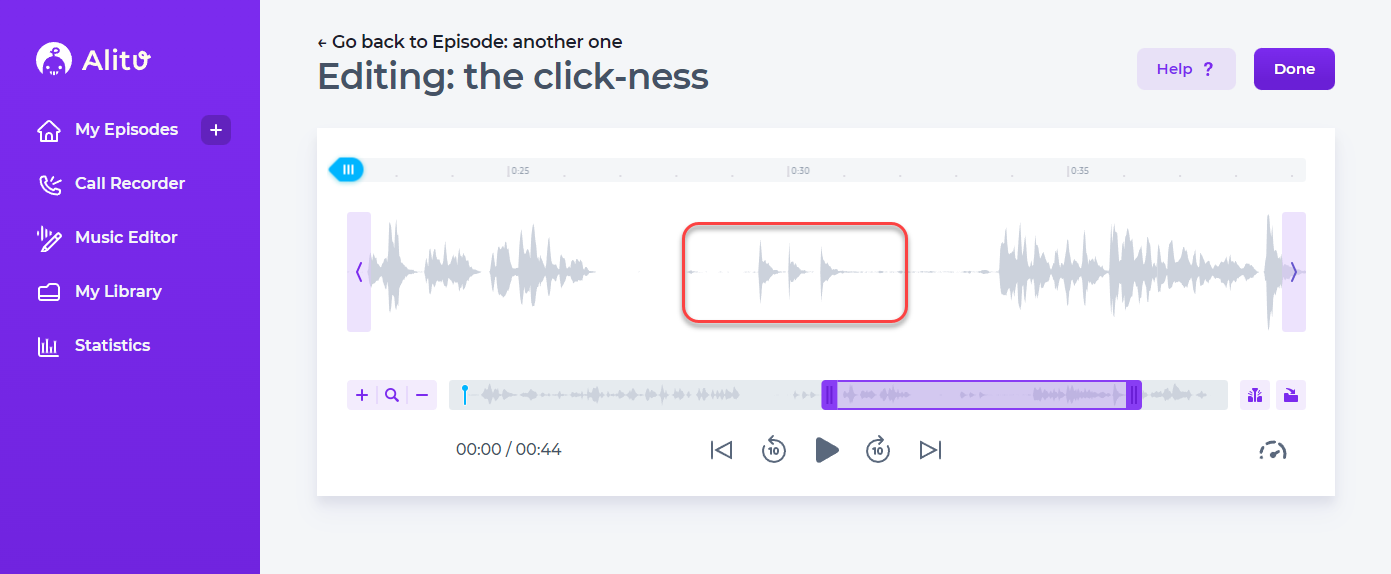
Which means, if you get to enhancing, you simply get all the way down to an affordable zoom stage and scan the waveform, on the lookout for these alerts.
Then you definately spotlight the tip of the sentence earlier than the error, proper by way of to the purpose earlier than you restart, and delete. Mistake eradicated!
Professional Tip: You’ll be able to fairly simply get within the behavior of remembering the beginning of the sentence earlier than you made your mistake, after which restarting with the identical first few phrases. Which means that after I discover a mistake in enhancing, I hearken to the re-start first, after which return a bit and discover the identical few phrases earlier than the error. I do know that’s the place I’ve to begin the edit. That saves one other few seconds, each time!
Take Management of Errant Interviewees
Let’s end up with a tactic that not solely comes underneath the class of “time saver,” each in recording and enhancing, but in addition bleeds into “improved content material.” It’s the straightforward idea of taking possession of your present, and your content material.
The factor is, interview exhibits are nice when achieved properly. However, they’re typically not achieved properly. That may result in sub-par content material, positive, however even worse, it results in an entire lot of additional time in your course of.
It takes extra time to document as a result of the visitor goes off on tangents. Or they don’t keep on level and fail to reply questions. That every one means extra time enhancing, attempting to chop the fluff, and elevating the standard.
As a substitute, take management, and provides some tips earlier than you begin. Listed below are just a few of the issues I would say:
- I’d like to share just a few bits of steerage. I do know my viewers rather well, and I’ve discovered that these may also help you come throughout in the very best means with them.
- We wish to preserve this present actually conversational. So, attempt to preserve solutions brief and sharp, lower than a minute, two at most.
- Don’t fear, we’ll get into element, however I’ll ask concerning the components I do know my viewers loves.
- All the time be at liberty to ask me questions again, so we’re each concerned, and it flows properly.
- I will interrupt you on occasion. Not as a result of your content material’s dangerous, however as a result of I do know what my viewers needs and I’ll preserve us monitoring with that.
Hold emphasizing that that is of their finest pursuits. This makes them look good! You already know your viewers, and if the visitor needs to make a terrific impression, then you possibly can assist them try this. However, provided that they work with you, and allow you to information the dialog (#3).
That primarily means shorter solutions (#2), and being ready to be interrupted (#5 — and that is a lot simpler if you point out it earlier than you begin).
I’ve additionally discovered that #4 is a very attention-grabbing hack, for 2 causes. First, conversations are significantly better when it’s two methods. And second, asking questions simply places individuals into conversation-mode relatively than monologue-mode. (It additionally helps keep away from the 5-minute solo tangents which are the bane of any interviewer’s life!)
How Will You Minimize Your Manufacturing Time?
To me, there are two large concepts to this.
First, easy routines and purposeful instruments. Which means:
- Hold your weekly routine as easy and as common as potential.
- Use seasons to simplify your planning.
- Go solo to simplify the logistics.
- Document as when you’re reside and commit to essentially easy enhancing.
Make it your objective to seek out these routines that repeat so to match your complete workflow simply into your week.
Secondly, it means utilizing instruments with actual goal. As podcasters, we could be responsible of including in on-trend instruments or techniques that take up extra time, relatively than put it aside. As a substitute, decide fewer, higher instruments, and go deep with them.
The press trick is a instrument, use it to save lots of hours in enhancing. Alitu is a instrument that works nice alongside it, and provides extra options to annihilate the time spent enhancing and engineering. In the event that they don’t give you the results you want, although, there are dozens of decisions. Discover only a few that fit your needs, personally, and go deep.
Above all, use these techniques to hone your private routine, discover the strategies that give you the results you want, and provide up all that additional time to the content material itself. Use it to speak to your listeners. What do they like? What do they not like? Discover out what they actually need from you. That’s what makes the massive distinction. Not an additional move of compression, or a jot of noise discount. As a substitute, get easy, get tooled up, after which you possibly can actually begin thriving as a podcaster.