


Key Takeaways
- After exiting the Subway partnership, Hero Bread centered on 5 SKUs.
- The model pivoted to DTC, then explored completely different retail channels.
- Now, it’s navigating what the CEO calls the third chapter in its DTC playbook.
In 2022, when YuChiang Cheng invested in Hero Bread on behalf of 444 Capital and stepped in as the corporate’s interim chief advertising officer, the low-carb, zero-sugar model was at a vital crossroads.

Cole Glass had based the corporate in 2019 to deal with his extreme meals allergic reactions associated to pollen. By October 2021, a partnership with Subway appeared like an thrilling path ahead. The concept was to get the macro-friendly bread merchandise into as many palms as doable so folks may style it for themselves.
Nonetheless, across the time Cheng joined the corporate, it was clear the unit economics didn’t make sense. The Subway deal wasn’t worthwhile; Hero Bread was operating out of cash.
“ We have been simply too small on the time and couldn’t service it, didn’t have the assets and all of the infrastructure put in place to successfully ship that,” Cheng says. “So we backed out of it.”
Hero Bread introduced in $54 million in income final 12 months
Cheng pivoted to a direct-to-consumer (DTC) technique, permitting the model to obtain suggestions from shoppers extra rapidly and drive word-of-mouth gross sales, he says.
Cheng assumed the position of CEO in November 2023 and has continued to develop the corporate.
In a funding spherical introduced in June 2024, Hero Bread raised $21 million in underneath 90 days. The spherical, co-led by Cleveland Avenue, DNS Capital and Composite Ventures, introduced the corporate’s complete funding thus far to greater than $68.5 million.
Hero Bread introduced in $54 million in annual income final 12 months. Moreover, the corporate greater than doubled its retail presence in two years, increasing from about 4,000 to 10,000 doorways, which features a current Goal launch.
However Hero Bread’s profitable push into retail — a feat many CPG manufacturers that launch DTC hope to attain — doesn’t imply the corporate plans to place the brakes on its DTC technique anytime quickly.
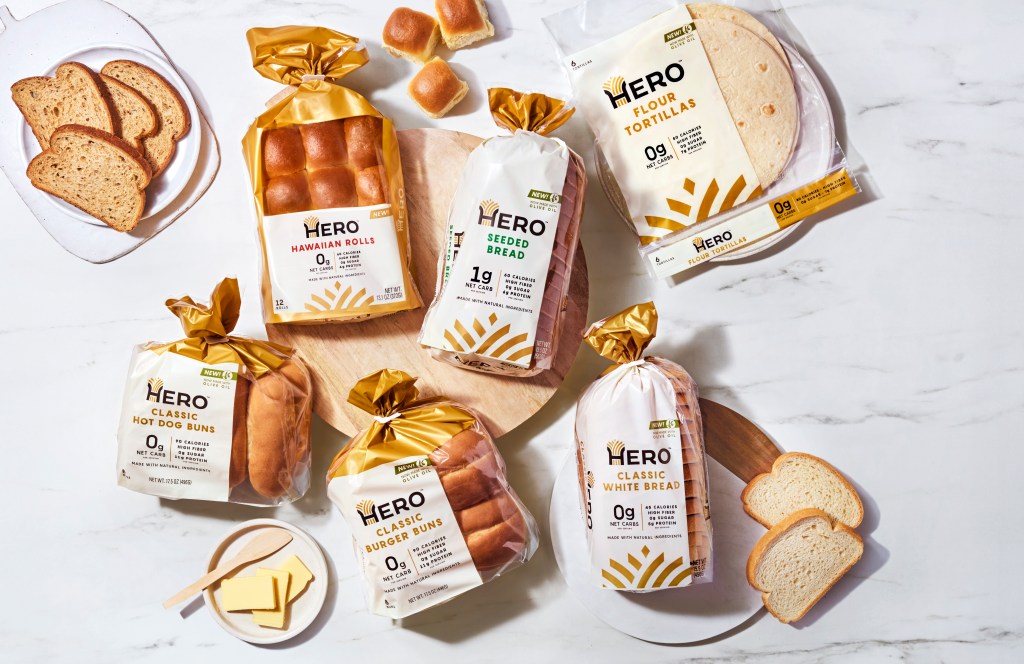
Entrepreneur sat down with Cheng to study extra about what he calls the “third chapter” of Hero Bread’s DTC playbook, and the way it’s persevering with to unlock progress for the corporate.
Hero Bread experimented with completely different retail channels
After strolling away from the Subway partnership and prioritizing DTC gross sales, Hero Bread centered on 5 SKUs: white bread, seeded bread, burger buns, sizzling canine buns and flour tortillas.
The road-up additionally made sense as the corporate entered retailers: The aim was to supply on a regular basis staples that may drive repeat purchases on a weekly foundation.
Initially, although, Cheng and the staff weren’t fairly positive which retailers could be the fitting match.
“It’s a really mainstream style profile,” Cheng explains. “So there was loads of debate, if that is going to be extra of a Publix, Goal kind product, or is that this going to be extra of a pure Entire Meals, Sprouts, kind of product.”
So Hero Bread opted to experiment with several types of retailers. The corporate launched in Market District, Publix and Sprouts and deliberate to lean into whichever channel carried out finest. However six months later, the corporate’s merchandise had a powerful monitor report in any respect three.
“We have been very, very lucky in that,” Cheng says. “So as a substitute of selecting [retail] channels, we determined to select retailers that have been extra enthusiastic no matter what channel they have been in.”
It’s a distinct tactic than many CPG manufacturers use; they have a tendency to zero in on one retail channel and go regional, the CEO notes.
Hanging the steadiness between affordability and comfort
In fact, CPG manufacturers that increase into retail have the benefit of economies of scale.
“You may transfer tons of pallets on a truck rather more affordably than you’ll be able to ship particular person packages by ecommerce,” Cheng says.
In consequence, retail sometimes offers shoppers a extra reasonably priced method to purchase. DTC, then again, serves as a extra concierge path to buy not solely Hero Bread’s staple merchandise, but additionally different choices which may not have the ability to hit retail cabinets as seamlessly.
Hero Bread’s Crafted Assortment, which incorporates objects like croissants, lemon poppy seed scones, shortbread biscuits (hand-baked in Sonoma with brown butter made by a Michelin chef), lends itself effectively to the mannequin. The corporate’s current collaboration on pretzel bites with Auntie Anne’s does too.
“ [These are] small-batch, largely handmade merchandise which might be unique to hero.co, the place it simply wouldn’t make financial sense for us to hand-roll 300,000 to 400,000 croissants,” Cheng explains.
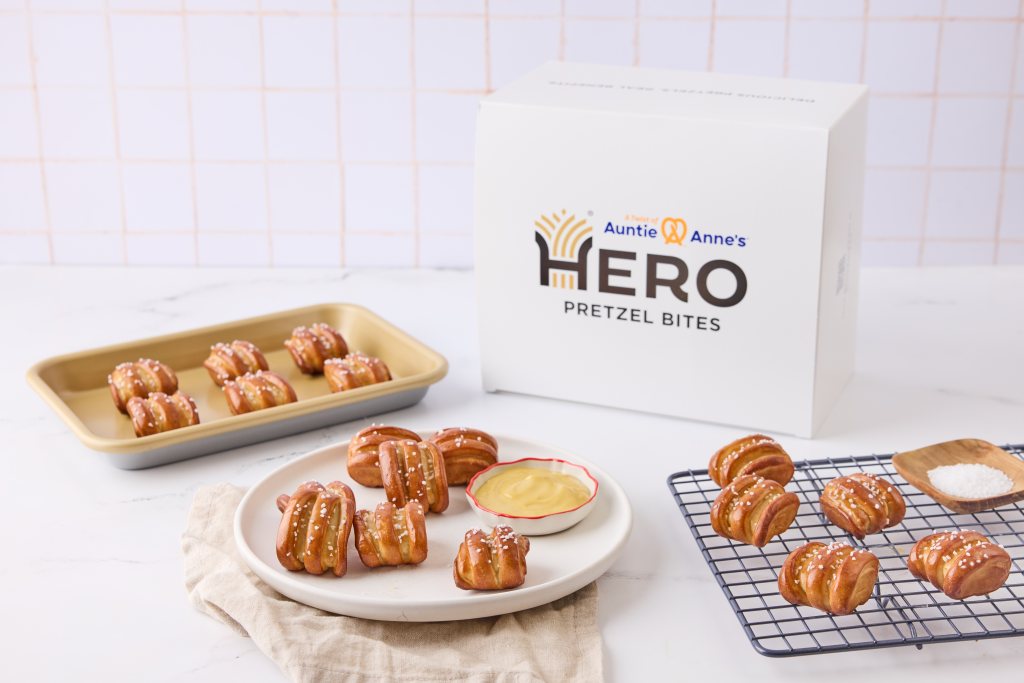
What’s extra, DTC can act as a useful testing floor for merchandise with the potential to promote successfully in a brick-and-mortar setting.
That’s precisely what the corporate did with its bagels, unveiling a limited-edition launch on-line in December 2024.
“ We weren’t positive if folks would wish to purchase bagels from us,” Cheng says, “so we initially made them in smaller batches, bought them at hero.co, and so they rapidly grew to become one in every of our best-selling objects.”
Hero Bread’s bagels landed on retail cabinets inside six months.
Assembly Hero Bread’s shoppers wherever they might be
Cheng doesn’t imagine a profitable entrepreneur or enterprise chief is outlined by what number of occasions they win.
“It’s what number of occasions you’ll be able to strive once more, no matter what number of occasions you’ve fallen down or how a lot blood you get in your face,” the CEO says. “There’s a degree of braveness that’s actually mandatory.”
It’s an inclination towards resilience that’s helped Cheng lead Hero Bread by some essential years that required an enthusiastic willingness to adapt to each problem — and the CEO appears to be like ahead to what comes subsequent.
“We’re at all times making an attempt to satisfy the buyer the place they’re,” Cheng says. “There’s a particular Hero fan, after which there’s the overarching bread fan. We imagine that the extra individuals who strive us, the extra individuals who will imagine [in us].”
Key Takeaways
- After exiting the Subway partnership, Hero Bread centered on 5 SKUs.
- The model pivoted to DTC, then explored completely different retail channels.
- Now, it’s navigating what the CEO calls the third chapter in its DTC playbook.
In 2022, when YuChiang Cheng invested in Hero Bread on behalf of 444 Capital and stepped in as the corporate’s interim chief advertising officer, the low-carb, zero-sugar model was at a vital crossroads.
Cole Glass had based the corporate in 2019 to deal with his extreme meals allergic reactions associated to pollen. By October 2021, a partnership with Subway appeared like an thrilling path ahead. The concept was to get the macro-friendly bread merchandise into as many palms as doable so folks may style it for themselves.
Nonetheless, across the time Cheng joined the corporate, it was clear the unit economics didn’t make sense. The Subway deal wasn’t worthwhile; Hero Bread was operating out of cash.