

Any web site or on-line utility – whether or not it’s an Web financial institution processing hundreds of thousands of {dollars} in transactions every day or a storefront for small neighborhood companies – can fall sufferer to malicious assaults and Web safety points. Hackers usually select their targets by vulnerability, not by dimension or notoriety. Smaller techniques, which can not even comprise delicate information, may be extra tempting targets just because they’re simpler to hack.
One may view web site safety as a single protecting shell round a web site and server, which may be strengthened or weakened. A extra correct perspective is that each cyber safety measure is a layer of safety. Every layer you add retains your information safer. Many layers will probably be redundant, and that is good. It might appear counterintuitive or paranoid, however the very best method when securing your web site is to imagine every layer will fail. For instance, two-factor authentication provides a second layer of authentication below the belief that the first password will in the future be stolen.
However what precisely is a safety subject?
What’s a Safety Subject?
A safety subject is any unmitigated threat or vulnerability in your system that hackers can use to do harm to techniques or information. This consists of vulnerabilities within the servers and software program connecting your online business to prospects, in addition to your online business processes and folks. A vulnerability that hasn’t been exploited is solely a vulnerability that hasn’t been exploited but. Net safety issues needs to be addressed as quickly as they’re found, and energy needs to be put into discovering them as a result of exploit makes an attempt are inevitable.
Listed here are the 15 commonest kinds of Web safety points or internet safety issues and a few related steps you may take to guard your self, your information, and your online business.

1. Ransomware Assault
The aim of a ransomware assault is to achieve unique management of essential information. The hacker encrypts and holds your information hostage after which calls for a ransom cost in change for the decryption key you must entry the recordsdata. The attacker might even obtain and threaten to launch delicate information publicly if you don’t pay by a deadline. Ransomware is the kind of assault you’re more than likely to see reported in main information media.
2. Code Injection (Distant Code Execution)
To try a code injection, an attacker will seek for locations your utility accepts person enter – comparable to a contact type, data-entry discipline, or search field. Then, by experimentation, the hacker learns what numerous requests and discipline content material will do.
For instance, in case your web site’s search operate locations phrases right into a database question, they are going to try and inject different database instructions into search phrases. Alternatively, in case your code pulls capabilities from different places or recordsdata, they are going to try to control these places and inject malicious capabilities.
Easy methods to Stop: Apart from server or network-level protections like CloudFlare and Liquid Net’s Server Safe Plus, additionally it is necessary to deal with this safety subject from a growth perspective.
Maintain any framework, CMS, or growth platform commonly up to date with safety patches. When programming, comply with finest practices concerning enter sanitization. Irrespective of how insignificant, all person enter needs to be checked in opposition to a fundamental algorithm for what enter is anticipated.
For instance, if the anticipated enter is a five-digit quantity, add code to take away any enter which isn’t a five-digit quantity. To assist stop SQL injections, many scripting languages embody built-in capabilities to sanitize enter for protected SQL execution. Use these capabilities on any variables that construct database queries.
3. Cross-Web site Scripting (XSS) Assault
JavaScript and different browser-side scripting strategies are generally used to dynamically replace web page content material with exterior info comparable to a social media feed, present market info, or revenue-generating ads.
Hackers use XSS to assault your prospects by utilizing your web site as a car to distribute malware or unsolicited ads. Consequently, your organization’s fame may be tarnished, and you’ll lose buyer belief.
Easy methods to Stop: Modify content material safety insurance policies in your web site to restrict supply URLs of distant scripts and pictures to solely your area and no matter exterior URLs you particularly require. This small and often-overlooked step can stop many XSS assaults from even getting off the bottom.
Most XSS assaults depend on the positioning developer having finished nothing to forestall it. For those who’re a developer, you may mitigate these internet safety issues with enter sanitization by correctly escaping HTML tag characters, comparable to changing < and > to < and > on any person enter processed by JavaScript. Small preventative measures can present a number of security.

4. Information Breach
A information breach happens at any time when an unauthorized person beneficial properties entry to your personal information. They might not have a duplicate of the info or management it, however they’ll view it and probably make adjustments.
You could not even know there’s a breach instantly. For instance, the attacker might have an administrative account password however hasn’t used it to make any adjustments but.
Easy methods to Stop: This Web safety subject may be difficult to deal with as a result of an attacker at this stage is usually taking cautious steps to stay hidden. Many techniques will print connection info out of your earlier session once you log in. Concentrate on this info the place obtainable, and be conscious of exercise that isn’t acquainted.
Most mainstream content material administration techniques and open-source purposes supply these notifications natively or by plugins. Different plugins automate the method of surveying your web site recordsdata for any new additions or modifications. The extra these instruments you apply, the extra you may concentrate on any doubtlessly suspicious exercise. Early detection of safety points offers you the very best choices for cleanup and prevention.
5. Malware and Virus An infection
Malware is brief for malicious software program. Malware on a workstation can encrypt information for ransomware functions and even log keystrokes to seize passwords. Hackers sometimes use malware to increase current entry to your web site or unfold entry to others on the identical community.
If malware is current, you’ve already been breached. Due to this fact, it’s essential to find out which Web safety points led to the breach earlier than any malware cleanup or restoration.
Easy methods to Stop: On workstations, mitigate the chance of this safety downside by being cautious about what you obtain and utilizing antivirus software program to search out and safely take away any malware. Conserving these antivirus purposes commonly up to date is essential, because the malware is consistently up to date and improved. As well as, workstation logins needs to be customers with out administrative entry. In a worst-case state of affairs, maintain good backups to revive the workstation whether it is compromised too deeply to scrub.
The scenario on the server finish isn’t a lot completely different. Malware scanning and intrusion detection instruments like ThreatStack can be found, in addition to instruments to observe for any file modifications or additions. Take care when deciding on CMS plugins or server purposes to put in. Run purposes with non-administrative privileges wherever doable.

6. DDoS Assault
Distributed Denial of Service (DDoS) assaults are usually not trying to achieve entry. Nonetheless, they’re typically used along with brute pressure assaults (defined beneath) and different assault sorts as a option to make log information much less helpful throughout your investigation.
For instance, the hacker might instantly assault your utility layer by overwhelming your web site with extra requests than it could actually deal with. They might not even view a complete web page – only a single picture or script URL with a flood of concurrent requests. Past the site visitors flood making your web site unreachable (which any volumetric assault will do), a Layer 7 assault can inflict additional harm by flooding order queues or polling information with bogus transactions that require intensive and expensive guide verification to kind out.
Easy methods to Stop: Blocking such an assault may be practically not possible by standard means. There’s usually no safety subject being exploited. The requests themselves will not be malicious and intentionally mix in with regular site visitors. The extra broadly distributed the assault, the harder it’s to differentiate respectable requests from these that aren’t.
For those who’re not in a position to make use of a DDoS safety service, choices are pretty restricted and fluctuate case by case. The best measures take in all of the site visitors by rising obtainable server and community sources to accommodate the extra site visitors till the assault subsides or may be remoted.
7. Credential Stuffing Assault
Credential stuffing is a typical time period we now give to hackers abusing the re-use of passwords throughout a number of accounts. If a hacker beneficial properties entry to certainly one of your account passwords, you may be assured they are going to try and log into dozens of different frequent providers with the identical username and password they only captured.
Easy methods to Stop: The most effective and best option to keep away from this safety subject is to easily by no means use the identical username or password for a number of providers. Multi-factor authentication additionally helps stop this by preserving the login safe even when the first password is weak.

8. Brute Power Assault
In a brute pressure assault, the hacker (often with the assistance of automation) tries a number of password guesses in numerous combos till one is profitable. In less complicated phrases, consider it as opening a mixture padlock by making an attempt each doable mixture of numbers so as.
Easy methods to Stop: Many CMS and mainstream purposes embody software program that displays your system for repeated login failures or provides a plugin system that gives this info. These software program and plugins are the very best preventions for brute pressure assaults, as they severely restrict the variety of guesses allowed.
Liquid Net’s Server Safe Plus can monitor your system for repeated login failures and robotically block the supply.
9. Weak Passwords and Authentication Points
A series is barely as sturdy as its weakest hyperlink, and a pc system is barely as safe as its weakest password. Due to this fact, for any stage of entry, all passwords needs to be of adequate size and complexity. A sturdy password ought to embody 18 characters minimal, and the longer, the higher. Password size will increase safety greater than complexity.
A password like “dK3(7PL” may be cracked quicker than a password like “ThisPasswordIsSixWordsLong” despite the fact that the latter comprises dictionary phrases.
Easy methods to Stop: Use two-factor authentication wherever obtainable. This will defend a login even when the proper password is obtained or guessed. Additionally, change your passwords on an everyday schedule, comparable to each 60 or 90 days, and by no means use the identical one twice.
10. Social Engineering
Social engineering encompasses the entire non-technical methods an attacker might use to achieve entry or do harm to your techniques or information. The commonest methodology is the oldest: mendacity or utilizing fabricated info to achieve belief.
A malicious actor might impersonate your financial institution, a utility supplier, and even regulation enforcement. They might declare to be a buyer or pose as an govt out of your group. The aim of such assaults is usually to both receive delicate info or trick an insider into unknowingly performing harmful actions.
- Receive confidential contact particulars.
- Receive account or bank card numbers.
- Receive or reset passwords.
- Persuade workers to droop or cancel important providers.
- Persuade workers to disable essential infrastructure.
- Persuade workers to add or set up malicious software program.
Social engineering assaults may be devastatingly efficient as a result of the individuals who launch them are well-practiced in persuasion and deceit. Many have years of expertise and finely-honed characters. For instance, an attacker posing as regulation enforcement might give such a talented efficiency that they’d idiot an precise regulation enforcement officer. You completely can’t depend on your capacity to evaluate character to guard your self from these assaults.
Easy methods to Stop: Look ahead to a few of these frequent red-flag cues to grow to be conscious of social engineering at play:
- Aggressive language and demanding habits designed to make you’re feeling such as you’ve finished one thing mistaken.
- A way of urgency round fixing an issue earlier than you have got time to fact-check.
- Threats of authorized motion or monetary penalty if you don’t instantly comply.
- Evasion and escalated emotion once you ask identity-verification questions.
If somebody claims to be out of your financial institution, you need to be capable of attain that individual by calling your financial institution’s publicly listed cellphone quantity and being routed by an operator. Likewise, if an electronic mail seems to be an bill from a service supplier, that supplier will sometimes have an internet portal or publicly listed customer support cellphone quantity you may name to verify any excellent payments.
11. SPAM and Phishing
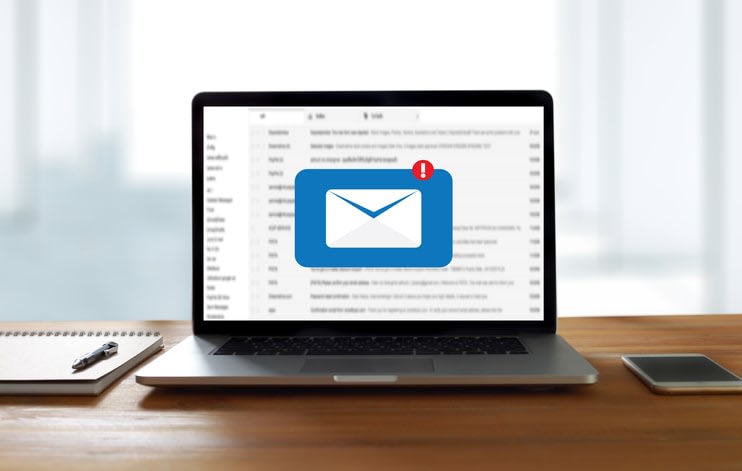
SPAM, or unsolicited electronic mail messages (usually in excessive quantity), will not be a brand new safety downside. SPAM has been a headache for many years at this level, and many people nonetheless obtain these emails in our inboxes which we should delete. A menace that many overlook is electronic mail account compromise, which then permits a spammer to ship their very own messages out of your mailbox. Not solely does your area’s electronic mail fame undergo, resulting in blacklisting, you additionally obtain doubtlessly 1000’s of electronic mail bounce-backs and error messages generated by the spam.
Phishing isn’t precisely an assault, very similar to fishing isn’t precisely searching. The hackers can forged a large internet, sending the identical generic bait to 1000’s of targets. In additional targeted assaults, they are going to use bait tailor-made to particular prey, generally known as spear phishing.
In spear-phishing assaults, workers might obtain faux notifications from inside techniques, with hyperlinks crafted to seize logins to these techniques. Additionally, hackers typically go whaling by searching a single high-profile goal with convincing bait.
Easy methods to Stop: One of the best ways to keep away from falling sufferer is to method the menace very similar to you’ll social engineering: belief no incoming messages. Use the next practices to achieve safety from SPAM and phishing makes an attempt:
- Use sturdy passwords that you just change commonly.
- Use mailing lists or electronic mail aliases for shared mailbox functions (i.e., data@ or gross sales@).
- Use Captcha or different human verification on all contact kinds.
- Confirm the supply of any messages you obtain that immediate motion.
- Don’t click on login hyperlinks in electronic mail messages. Choose as a substitute to open the related web sites manually or by bookmark.
- Don’t blindly belief any electronic mail attachments.
12. Insider Risk
Betrayal from the within can hurt your organization on a number of ranges. A trusted worker or contractor can harm your techniques, steal confidential info, and even sabotage group unity. The attacker doesn’t even have to be an worker. They may very well be anybody you belief, like a buyer or a supply driver. A lot as with social engineering, you merely can’t depend on your capacity to evaluate character to maintain your self protected.
Easy methods to Stop: Past preliminary vetting and background affirmation of any new worker or contractor, you may additional defend your self by limiting customers’ entry inside the group. Solely grant entry to techniques required for assigned duties and solely the minimal stage of entry essential to finish stated duties.
Accountability can also be essential. A malicious insider, like several hacker, prefers to be undetected. Don’t use single shared logins for any techniques. Don’t give a contractor or worker your CMS login. As a substitute, create a selected login just for them with applicable permissions. Disable this login when it isn’t wanted anymore.
Workers also needs to keep present on safety finest practices. Lock workstations in your workplace or store with a robust password any time they’re unattended. Additionally, disable computerized mounting of exterior disk drives.
13. Delicate Information Leak
Information leaks, like ransomware, are likely to make information after they happen. Information leaks can embody buyer information or confidential mental property like supply code. Something that’s a secret is a goal for hackers. This information is most frequently nicely secured, and compromise often happens by different strategies comparable to insider threats or social engineering.
Easy methods to Stop: Make sure you maintain personal information behind community safety and login restrictions. Restrict the variety of customers approved for entry. Make sure that all person entry is secured with sturdy passwords and multi-factor authentication the place doable and that customers change these passwords commonly. Think about using a safe managed electronic mail platform to filter out phishing and malicious hyperlinks. Additionally, limit bodily entry to essential techniques.

14. No Backups
As we coated earlier, we add layers of safety, assuming that earlier layers will sometime fail. Due to this fact, it’s necessary to have a restoration plan in place within the occasion of a complete loss, whether or not from catastrophic system failure or malicious exploit of one of many internet safety issues mentioned right here. The most effective restoration plans all the time start with thorough, common backups and enough backup retention insurance policies.
Easy methods to Stop: Specifics will fluctuate by your wants however revolve round three backup finest practices: The scope of your backups, the scheduling of your backups, and your backup retention coverage.
- Scope: Be certain that the backup scope covers all particular objects you’d want to revive web site performance or enterprise operations. It may very well be as little as a listing of recordsdata and a database or two or total disks. Embody any non-default server configurations or customized utility installations. For those who can’t afford to lose it or can’t recreate it rapidly from a default set up, embody it in your backups.
- Scheduling: This may be one of many hardest choices to make. An applicable backup schedule will save backups usually sufficient to catch updates and guarantee any restored web site will probably be fairly present – however not so usually as to negatively impression web site efficiency or trigger sequential backups to be primarily an identical.
- Retention: A typical mistake right here is solely preserving one backup from the earlier evening to permit restoration after a server failure. However what occurs if a web site compromise is small and goes unnoticed for a day or extra? Then the one obtainable backups are compromised as nicely. The farther again you may rewind the clock, the higher your choices are.
15. Not Updating or Patching Recurrently
Whereas unpatched techniques are maybe the best safety subject to keep away from, they’re additionally probably the most generally exploited. Practically each software program replace comprises not less than a number of safety patches for identified vulnerabilities. As hackers uncover exploit strategies, they share this info inside their neighborhood. Many freely-available automated hacking instruments comprise huge databases of those identified vulnerabilities. But, many CMS installations are not often (or by no means) up to date after they’re initially deployed.
Easy methods to Stop: You have to maintain all parts up to date to their newest obtainable supported launch. Maintain branched releases (comparable to WordPress) present inside the put in department. Improvement websites are simply as necessary to replace as dwell manufacturing websites. Bear in mind, the attacker doesn’t care whether or not you’re actively doing enterprise by a given CMS set up or not. They solely care whether or not it’s susceptible. Deserted take a look at tasks and previous demos are prime targets for hackers.
Maintain Your Methods Safe with Liquid Net
An assault in opposition to your web site just isn’t a matter of if, however when. Taking fundamental, cheap precautions and erring on the aspect of mistrust can prevent a number of bother regarding Web safety points. Have a radical, examined restoration plan for a complete loss or full compromise.